

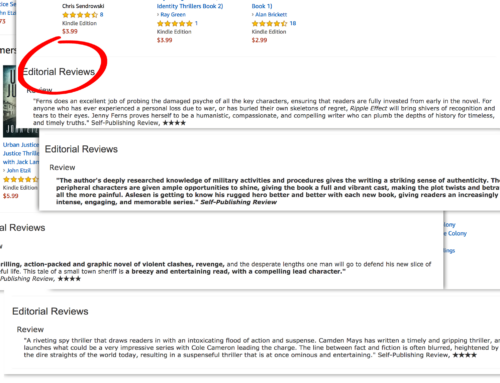
 Full disclosure: SPR charges for reviews. People hate this, and don’t necessarily differentiate between paid good reviews and paid reviews in general, especially with the current controversy of paying for 5-star reviews. Since SPR started charging, we’ve been able to review many more books than before, and pay reviewers for their time. So I do think there’s a difference between what Kirkus, or SPR, does, and guaranteeing a block of 5-star reviews without even reading the book. Even so, people are now decrying the entire paid review model. This may seem like self-protection, but I don’t think the paid review model is corrupt on its face. We can guarantee a minimum 500-word review and never guarantee that the review will be good. If this site made a lot of money via advertising, reviewers could be paid in this way, but it doesn’t, so this is the alternative.
All that said, the NY Times story about paid reviews is a dark day for self-publishing. As KW Jeter says,
You only have to scroll through the comments to the New York Times article to find a lot of people piling on, saying that incidents such as this demonstrate that indie ebooks are crap, that authors have to pay people to say nice things about, and that’s why they don’t buy them.
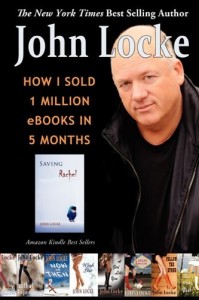
One person I blame (in part) for this is JA Konrath. For years now, he’s been plugging the financial viability of self-publishing, all with the purpose of showing that self-publishing is the future and traditional publishing is a dying model. He seems to care less if a book is well written than if it’s sold a lot, so he can put another nail into the coffin of “legacy” publishing. He’s been pushing the financial viability at the expense of the cultural viability.
Of course, John Locke is more to blame, as are all the writers who have used this service. But one of the most distressing things I’ve seen in recent years is everybody touting how much money you can make with self-publishing. This is exactly the kind of thinking that made me flee traditional publishing: money and sales are more important than content. If that’s the mantra, it’s not very surprising then if people do whatever they can to make money, at the expense of integrity. The entire publishing industry has been losing its integrity bit by bit, so it’s not just these authors who are at fault, it’s the entire culture around book selling.
As a result, some writers have gotten dollar signs in their eyes – the money was more important than the writing. If you’ve written a bad book, what other avenue do you have except to pay for a good review, as five star reviews aren’t going to come rolling in? If you’re confident in your book, you put it up and wait to see what happens.
What’s particularly stupid is why pay for reviews at all? If you’re so unscrupulous as to pay for good reviews, how hard is it to create a bunch of fake Amazon accounts with a bunch of different email addresses? Paying someone else to be fraudulent is doubly lazy.
At the same time, it doesn’t make sense to paint too broad a brush. Everyone who’s self-publishing doesn’t care more about money than art, and everyone who’s self-publishing isn’t a weak-willed no-talent creep who pays for good reviews. This is a terrible development, but it’s isolated to a handful of writers out of the thousands who are self-publishing. Most writers wouldn’t think to do this. So while some people are jumping at the chance to gloat – See, I told you self-publishing is terrible – this is just a variant of the same old argument. There are good books and bad books. There are good writers and bad writers.
But writers? Behave yourselves – because your behavior really is a reflection on everybody.
Get an Editorial Review | Get Amazon Sales & Reviews | Get Edited | Get Beta Readers | Enter the SPR Book Awards | Other Marketing Services







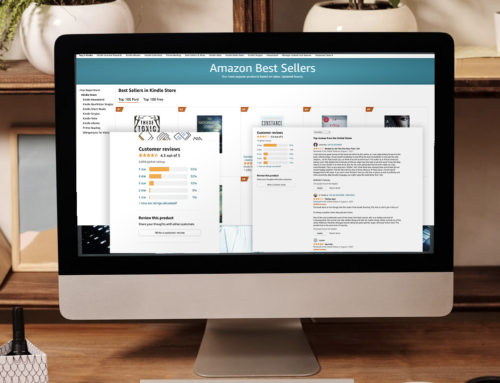
I agree that the money magnet is a big part of the problem, but doesn’t it seem like there are two tributaries to this stream? On the one hand, all the stories about “big winners” like John Locke and Amanda Hocking have been drawing people, but all self-publishers face the “needle in a haystack’ issue, and this might have been Mr. Locke’s motivation in the first place – not necessarily just money but simply getting noticed. Buying these reviews was part of the package that also included “doing social media” and “participating in forums” and all the other things you’re supposed to do in order to get attention for your book. What bothers me more than “positive reviews” is the whole system of online ratings. If there were no “stars”, but you had to actually read the reviews, wouldn’t that be different? This is where places like SPR can make a difference, I think. If you don’t have the drive-thru convenience model of an Amazon, you might truly become a trusted resource.
sour grapes and envy
What is?
I’ve read so much of this back and forth between the kings of the mountain and the little guys, no matter how hard I try I can’t see it as anything more than envy to the ultimate degree…sour grapes, and a bunch of elitists who can’t resist wasting their time daily to trash indie writers. Quite frankly they’re looking foolish and childish. Does any one person want to convince me that an agent or publisher never ‘bought’ a review? Taken some one out to dinner,etc….come on, lets’ wake up and see this B.S. for what it is…jealousy.
Henry, thank you for this post. As I always do, I find myself agreeing with you completely. There is absolutely nothing wrong with authors paying for honest reviews. It isn’t impossible to find out which is an honest reviewing service and which isn’t. Let’s see, here’s a five-star book with two dozen obvious typos and grammatical mistakes in the first (free) chapter. The reading market will eventually figure out the same thing. The market will compel reviewers either to give honest reviews or to have few or no takers for their services, from either authors or readers.
Thanks, Ron. The weird thing is this actually makes me feel better in a way. I’ve seen books with dozens of good reviews and a totally inept synopsis/cover, and thought, What chance do I have if this is what people want to read? Turns out, they don’t.
Once again, Henry, I agree.
Henry, I appreciate that you acknowledge charging for reviews. I’d like to think a paycheck doesn’t influence a review but I somehow believe it does.
After all, if you sincerely disliked the first fifteen books you read for SPR (and, in the self-pub world, that’s not unlikely) and you reviewed them honestly, you’d struggle to find anyone willing to pay for their own review. Even if you would like to disagree with me, I think you have an incentive to like the authors who approach you for reviews.
That’s true to a point, but I do think it’s possible for reviewers to have integrity. It’s also possible for a bad review to not be totally useless. I just sent a review back to a reviewer for revision because it was a bad review that was overly vindictive – like she had a vendetta against the book. A bad review can still be constructive without being mean-spirited. That is not the same thing as guaranteeing a good review, though some might see it that way. It’s just guaranteeing that the review will be well-written.
The way it’s gone is that writers have chosen to not have those bad reviews be published at all. So it’s true, more good reviews will end up on the site than bad reviews overall – because no one is going to choose to not publish a good review. I could see an argument that writers shouldn’t even have this option – it’s not guaranteeing a good review for each writer, but it is more or less guaranteeing most of the reviews will be positive. To be clear: some writers have chosen to have bad reviews published. Honestly, I’m on the fence about offering this, until virtually every writer requested this option. But this is also self-publishing: writers are in control of their output. They can also be in control of a publishing a review that they’ve paid for. Pay to play is a different model. I’d be open to hearing dissent if anyone thinks this is a terrible idea.
On Wattpad, I encountered my first group of ‘mainstream’ users. Up to that time, it seemed, I was encountering, on creative or writing websites, users that were more focused on doing the right thing. So getting slapped in the face a few times by kids that wanted to be adored was eye-opening.
And when I started to browse the reviews on Amazon, I noticed this tendency to five-star reviews; I just hadn’t been INVOLVED in that kind of culture, back in the day. Everyone voiced their opinions, good or bad on what we created and when I noticed this ‘bright and shiny’ syndrome on Amazon, it started to unsettle me.
I mean, hell, did Neil Gaiman give a glowing review to every book he read as a journalist? I hardly doubt it.
Currently, to make me sane, I read the NYT Book Review reviews. Sweet stuff. You see the point to reviews like that. I am also, currently, randomly finding trad books to read. That soothes my soul as well. I may just start doing reviews on Goodreads for the hell of it, but _I’ll_ pick the books. Jeese….
Cos, glory be, there’s a lot of writing going on out there that’s not..great. You know? *grin*
*laugh*
Old reply but something I’ve been contemplating recently. A bit of backstory.
I checked out Amazon right around the time this free KDP download thing seemed to be causing new writers to cry. They’d get 10K free downloads but no money sales. The pattern, just around that time, was, too many users were waiting to download free books. This was, oh, four years ago.
There were other things about Amazon, just at that moment, that didn’t feel right, so I headed off to Wattpad and enjoyed reading and commenting on people’s books. I also did that a whole lot longer ago on deviantart. I like reading and encouraging people. I’m stupid that way, honestly. *shakes head*
These days, I’ve been reading trad books. And given all the time I used to spend reading other user’s books (and they hardly read mine but that’s a longer story) on Wattpad, I’m a bit reticient to write without compensation.
This idea, once put forth by Hugh Howey, of charging someone ten dollars to read your book as far as you were able and give a completely honest response, seemed like a cool idea.
But then, I seemed to run into that politically correct period where being paid to review seemed wrong.
But starting to realize that this whole (similar to how the NYT arrives at its bestseller’s) ranking run-up to Amazon is completely similar to Wattpad (and no one got paid for their books on Wattpad), I sorta sit here and smile.
Same process, different environment.