

Timing, Ethics, and the Long Game: When to Seek Endorsements, What to Expect, and How Not to Trip the Wires
This installment sets expectations of when to pursue endorsements, and highlights the policy guardrails that keep your campaign safe.
Timing options, with evidence-based expectations
Pre-launch (T–12 to T–16 weeks for selective outlets)
- Pros: Quotes are ready to populate Editorial Reviews on day one; you can weave them into the description and A+ Content and use them in outreach. Early framing influences the first shoppers who also become your first reviewers.
- Cons: Longer lead times and less flexibility if you wish to revise the manuscript.
Launch window (T–2 to T+6 weeks)
- Pros: Endorsements are visible when you’re driving newsletter and ad traffic; early review volume begins compounding, which meta-analyses link to stronger sales effects across categories.
- Cons: Operational complexity; avoid “burst then bust.” Stagger outreach so reviews arrive in a steady cadence.
Backlist (any time)
- Pros: A fresh endorsement plus a cover or price refresh can reboot discovery; volume continues to matter months or years later.
- Cons: Some outlets prioritize frontlist; broaden to associations, festivals, and domain newsletters that host stable review pages you can cite.
Ethics and compliance: hard boundaries to respect
- Keep promotion out of customer reviews. Amazon’s Community Guidelines disallow reviews written as promotion or with conflicts of interest; promotional copy belongs in the description, A+ Content, or Editorial Reviews, not the customer review section.
- Incentivized reviews are restricted. Since 2016, Amazon has prohibited incentivized reviews outside Vine, with a carve-out for traditional advance review copies of books provided there’s no quid pro quo and no attempt to influence the content. Amazon reiterated this in its own briefing and third-party coverage. Build your ARC program accordingly.
- Don’t manipulate. Empirical work documents detectable patterns of review fraud and the economics behind “promotional reviews.” It’s not just unethical; it’s increasingly easy to detect and can produce platform penalties.
A 90-day, evidence-based sequencing plan
Day −90 to −60
- Finalize galleys; request 3–6 endorsements from credible sources who will host permanent webpages. Draft two variants of each quote (≤30 words and ~50 words) for later testing.
- Build a media kit page on your site that cites the endorsements and links to the sources, and ensure your book page uses a canonical URL so all links consolidate.
Day −30 to −7
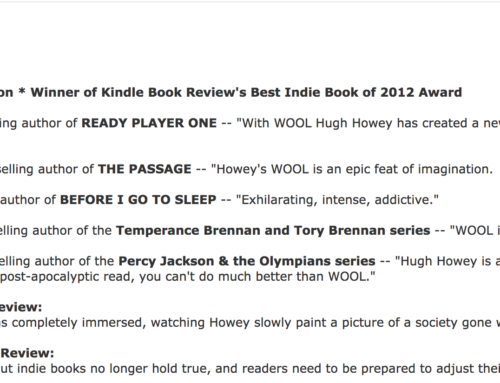
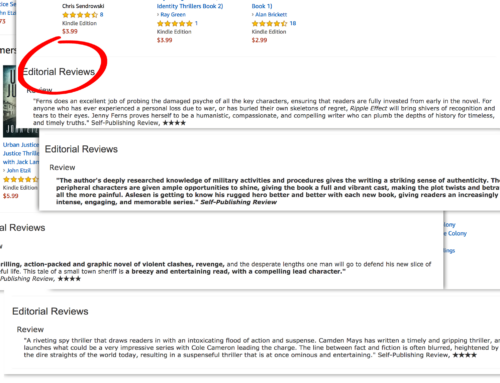
- Add endorsements in Author Central; place the most authoritative sources first; bold the attribution. Confirm your product description echoes the same core promise.
- Prime your ARC list with policy-compliant asks emphasizing specific feedback. Specificity boosts helpfulness and downstream influence.
Launch week (0 to +7)
- Drive your list first; point inbound traffic through consistent links so your A/B tests (order, length) run on comparable audiences.
- Monitor early reviews for variability rather than just the mean; variability is often what dents conversion. The antidote is clarity in your editorial frame and product description.
Day +7 to +45
- Maintain a steady cadence of legitimate review acquisition via back-matter CTAs and newsletter reminders.
- Syndicate endorsements into ads and graphics; keep promotional copy out of customer reviews to stay compliant.
- Publish any additional media quotes to stable URLs and link to them from your site; slow and steady reinforcement helps branded queries over time.
Backlist quarter
- Pair a temporary price promotion with a new endorsement or accolade; refresh the order of Editorial Reviews on your detail page; resubmit the media kit to relevant newsletters or festivals.
A brief FAQ for skeptical authors
“Do endorsements actually move conversion?”
They help at the layer readers actually see first. The behavioral literature shows text is processed and identity cues matter; endorsements are your only controllable, attributed text above the review stack.
“What if I get a few early one-stars?”
Expect skew and outliers. Don’t chase them directly; instead, clarify framing with endorsements and description, and keep building compliant volume.
“Is negative press ever good?”
Sometimes, for unknown products, but it’s volatile and context-dependent. Better to be clear than infamous.
“A word after a word after a word is power.” — Margaret Atwood
Endorsements supply the first words; readers supply the chorus. That’s how power compounds.
Get an Editorial Review | Get Amazon Sales & Reviews | Get Edited | Get Beta Readers | Enter the SPR Book Awards | Other Marketing Services











Leave A Comment