

 Marc R. Schneider writes the way he lives: with grit, heart, and a relentless obsession with character. A man of many routes, Marc’s career began in the high-stakes control room of CNN in Atlanta before transitioning into a twenty-year journey as an educator and coach. From the inaugural football staff at Georgia State University under Bill Curry to coaching high school football in Georgia – and even collaborating in a commercial capacity with a Hall of Fame NFL quarterback – Marc has spent his life studying what makes people rise, fall, break, and rebuild.
His perspective was forged in the fire of a toxic household and a lifelong battle with obsessive-compulsive disorder. Over time, Marc mastered the art of redirecting intrusive, destructive obsessions into constructive, value-driven ones. What started as a coping mechanism evolved into The Obsession Progression, a framework for living with purpose.
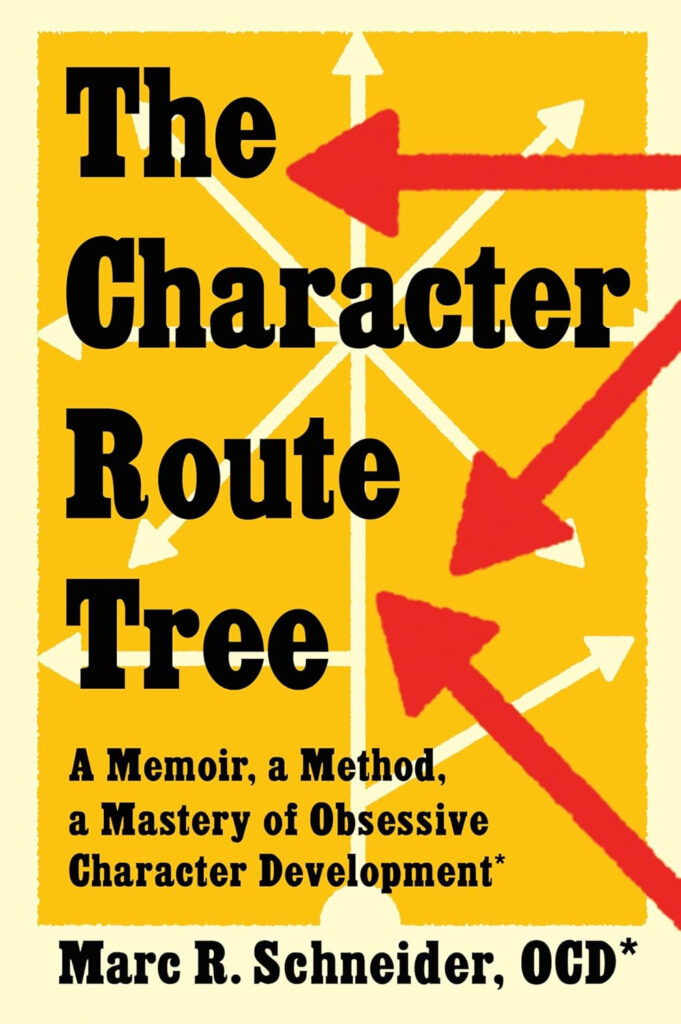
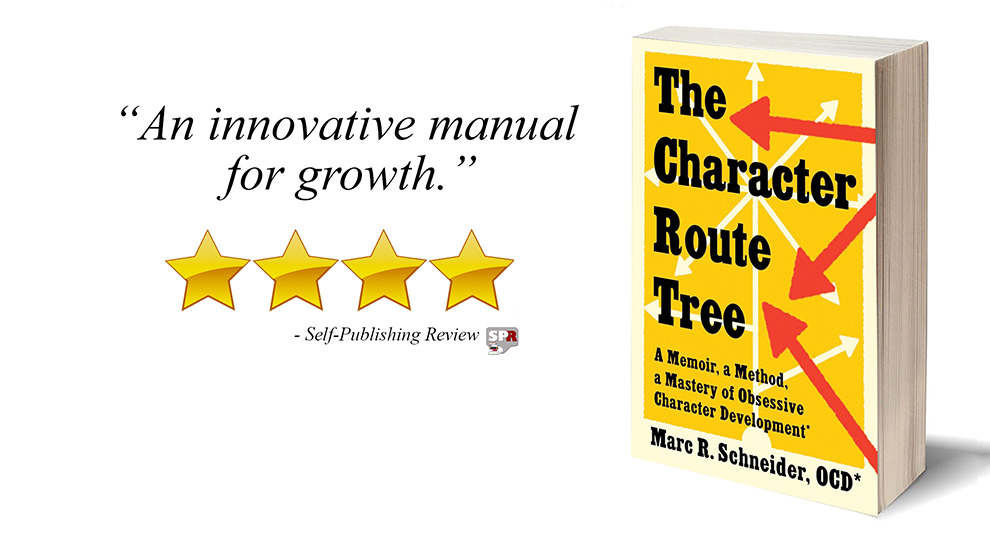
In his debut book, The Character Route Tree: A Memoir, a Method, a Mastery of Obsessive Character Development, Marc blends raw personal storytelling with a cinematic narrative to explore how life’s hardest hits can become its clearest lessons. Part memoir, part playbook, and part mastery system, the book reflects his belief that character is built through structure, accountability, and an obsessive focus on the right things.
A devoted husband and a father of two, Marc is a coach at heart who doesn’t romanticize struggle or preach perfection. His work is rooted in vulnerability and the daily discipline it takes to build momentum. Through story and structure, he helps people turn “character chaos” into a meaningful route – empowering them to organize their thoughts, ignite their Human Intelligence (HI), and run their own route toward fulfillment.
When he isn’t writing or teaching, Marc continues to chase the next story, the next drill, and the next spark of character in the everyday moments that matter.
Tell us about your book.
The Character Route Tree isn’t just a book; it’s a life-management system that delivers the value of three distinct volumes in one standalone engine:
Part I – A MEMOIR: The Yearbook
A raw, unfiltered account of the author’s journey – navigating a childhood defined by abuse, a decade-long war with self-destruction, and the paralyzing complexities of OCD. It serves as the essential “pregame” to the Method, tracing the path from a 66-mph suicide attempt going the wrong way on Route 9 to finding absolute direction with 9 Routes in a life of calculated, obsessive discipline.
This volume is a masterclass in mental conversion, proving that the same reflexive intensity that once fueled rage and a suicide attempt can be harnessed to fuel character. Schneider realized this when he threw himself into coaching football; his memoir is the definitive proof of concept, demonstrating how the “noise” of a chaotic mind is converted into a high-performance engine. You have to understand his struggle in the trenches before you can run the routes in The Playbook.
Part II – A METHOD: The Playbook
Character doesn’t just happen; it is engineered. Using the logic of a football route tree, Schneider breaks down character development into 9 distinct routes. Each route is a specific mental pattern designed to help you navigate pressure, accountability, and self-direction.
Throughout The Playbook, you will rebuild your internal language through boldface ACRONYMS (A Coach’s Rationale: Obsessively Nurture Your Moral Sanity), transforming heavy moments into mental muscle memory, ensuring that when the pressure hits, you don’t hesitate – you execute.
THE COACH’S DRILL: The A.C.T. Framework
Every route reinforces the ACT Framework, a repeatable three-step drill to stop mental friction in its tracks:
Ask – Create awareness. Pause to ask the right question before reacting.
Commit – Choose a mindset or behavior.
Try – Run the play. Act, test, and adjust.
Part III – A MASTERY: The Workbook
Discipline requires a vocabulary. This volume is a searchable, tactical GLOSSARY of 850 ACRONYMS designed to help you Go Long On Short-term Sensibilities And Rally Year-round. In high-pressure moments, your brain doesn’t have time for paragraphs; it needs a code. These ACRONYMS give you the exact language needed to anchor your discipline and reinforce your character the moment life applies pressure.
THE WORK OF A LIFETIME
Most books are read once and shelved. The Character Route Tree is designed to be lived. You’ve spent years going the wrong way at full speed. It’s time to take that same engine and point it toward the person you were meant to be.
 Why did you want to write a book?
My obsession with the written word began at five years old. I used to copy books like Go, Dog. Go! and Are You My Mother? by hand, stuffing the handwritten pages into my desk drawers. I didn’t realize it then, but I was already training myself to value the weight of a story. That obsession followed me into a twenty-year career where the football field became my classroom, and the influence of the game became as much of an educational force as a competitive one.
I wanted to write a book because sharing influence is life’s greatest work. It takes careful thought and cautious energy to write, but it takes even more to process an author’s experience and manufacture it for your own use. I was hooked on the challenge of attempting that. I wanted to disclose the origin of my own mindset and brand story, but more importantly, I wanted to provide a pathway for readers to develop and share their own.
Why did you choose to self-publish?
The Character Route Tree is a 760-page raw, road-tested survival guide. A traditional publisher would have asked me to cut the 9 Routes in half or soften the memoir to make the book more marketable. Those 760 pages had to happen because obsession does not do brief. This had to be a “big book.” By self-publishing, I kept the integrity of the method. I didn’t write a book to fit a shelf; I wrote it to fit my system and provide a mastery of character. I’d trade a corporate marketing budget for that kind of creative sovereignty every time.
What do you think are the main pitfalls for indie writers?
The biggest pitfall for indie writers is treating launch day as the finish line. Many think the job ends when the book is available for purchase, but in reality, that’s just the beginning. That is when the DIY stressors really kick in.
There were parts of the publishing process I took on solely because of the nature of the work. As I mention in my author’s note, I chose not to have The Character Route Tree edited in the traditional sense. I didn’t want my message filtered in any way. Additionally, the acrostic sentences create a specific type of prose that might put a professional editor in a bind. I wanted the message to be as true and raw as possible – it went from my brain to the page for all 760 pages.
However, “Indie'” doesn’t have to mean doing every single task alone. To move from a manuscript to a masterpiece, I knew I needed a professional eye for the presentation. I connected with a talented book designer, Peter Selgin, through Reedsy. Peter was able to see the forest through the trees; he helped me take the book to another level with a cover design that matched the weight of the content. If you try to do everything yourself, you risk the quality of your message.
What tips can you give other authors looking to self-publish?
The biggest piece of advice I can give is: Don’t wait until the book is live to start your brand. You need to build your community while you are building your work. If you wait until launch day to start talking, you’re speaking to an empty room.
My philosophy is that your book is the manual, but your platform is the conversation. The book holds the static truths, but the platform is where those truths breathe and evolve with your readers. Use your journey, your darkest chapters, and your progress to invite people in early. By the time they have the book in their hands, they aren’t just readers; they are part of the movement.
As a writer, what is your schedule? How do you get the job done?
I write every day. I have to. The Character Route Tree took me six years to complete, and for most of that time, every day started at 4:30 AM. That was when I was most productive. During the school week, I’d write for two hours before heading to the classroom.
The schedule was tough, especially during the fall when my coaching duties took over. I often had to wait until December to really put in the heavy hours I wanted – which, for me, meant 10-to-16-hour writing days.
How do you deal with writer’s block?
I don’t sit and wait for the block to clear; I go find the story where it happened. When the words stop flowing, I get in the car. I listen to music that triggers the specific era I’m writing about, and I physically return to the “scene of the crime,” so to speak.
During the six years it took to write The Character Route Tree, I went back to my old neighborhood in Howell, New Jersey, many times. I took walks through those streets to get the grip on the memories. I even spent hours at Red Moon Pizza in Howell, a childhood favorite. I’d order my usual – a Veal Parm sub – and just sit there. The atmosphere was so right that I ended up writing four full chapters right there at the table.
Tell us about the genre you wrote in, and why you chose to write this sort of book.
I chose to write a self-help memoir on personal mastery because I have been drafting it throughout my entire life. After my first five years of coaching, it was printed as a manual for my players – a document that grew to over 100 pages as I obsessed over the details of the wide receiver position. However, as a married man and a father, I realized that the true challenge wasn’t on the field; it was the game of life. As coaches, we can become so obsessed with how we want to remember a season; I wanted to put something together that reflected how we want to remember our lives. Leaving a legacy became the game I was obsessed with.
I see life as a game. I don’t expect everyone to like that comparison, but I find it hard to ignore. It is our inner strength against our outer limits. We strategize, we plan, and we overcome. For us, actions and consequences do the balancing while we calibrate our expectations and weigh the results. I wrote this book because I saw virtuous living taking a backseat to virtual distractions. I felt the weight of a world in “character chaos,” where the ego system dominates our attention and our character ecosystem struggles.
To provide a route out of this chaos, I looked deeper into the football route tree. I stopped seeing just patterns on a field and started seeing real potential worth developing. “The Nine Routes of Obsessive Character Development” were created as a novel approach to personal character scouting, preparation, and strategy. I believe the dynamic nature of life demands a meaningful, ethical, and fulfilling route to throw our character wide open. I’ve learned that my open heart and open mind are my biggest playmakers.
To me, character is the ultimate life-changer. It blocks negativity and stays within the bounds of integrity. I wrote this book because I believe character is the difference between a good run and living a full life – or a good ruin and living a fool’s life. I wanted to ensure my readers have the same manual I use to go the distance.
Who are your biggest writing inspirations and why?
My biggest inspirations are Mario Puzo and Francis Ford Coppola. I’ve always admired their individual work, but as I’ve grown older, I’ve become deeply appreciative of their collaboration on my favorite film of all time, The Godfather.
They have an incredible grip on the family romance – the messy, complicated binds that exist among its players – and an obsessive attention to detail. I try to write cinematically. I don’t just see a paragraph; I see a scene. I see each sentence as a micro-beat in a larger sequence.
Like Puzo, I’m interested in the gravity of the choices we make and the weight of the legacy we leave behind. Whether I’m at Red Moon Pizza in Howell or at my desk at 4:30 AM, I’m trying to capture that same cinematic tension in The Character Route Tree. Every one of those 760 pages was written to feel like a frame in a film that you can’t look away from. It’s a play-by-play disclosure of a lifetime of learning – a guide to help others obsess over the right things and find their own route to a full life.
How do your friends and family get involved with your writing? What do they think of your book?
My wife, Dawn, and my two sons have been the bedrock of this entire project. They’ve shown incredible patience, faith, and even laughter through every write and rewrite, every late night, and every long drive back to the “scene of the crime.”
They were even part of the process in a very practical way. I’d often dictate things to them while I was driving and have them text those thoughts back to me so I wouldn’t lose the “grip” on an idea before I could get to a keyboard. They’ve been the heart of The Character Route Tree from the very first snap to the final page.
What do they think of the book? They know that my heart goes with this work. They didn’t just support the writing; they lived the ‘Obsession Progression’ right alongside me. They saw the 4:30 AM sessions and the 16-hour days in December. They know that while it’s a manual for the reader, it’s a piece of our family history on the page.
Author Links





Get an Editorial Review | Get Amazon Sales & Reviews | Get Edited | Get Beta Readers | Enter the SPR Book Awards | Other Marketing Services
















Leave A Comment