

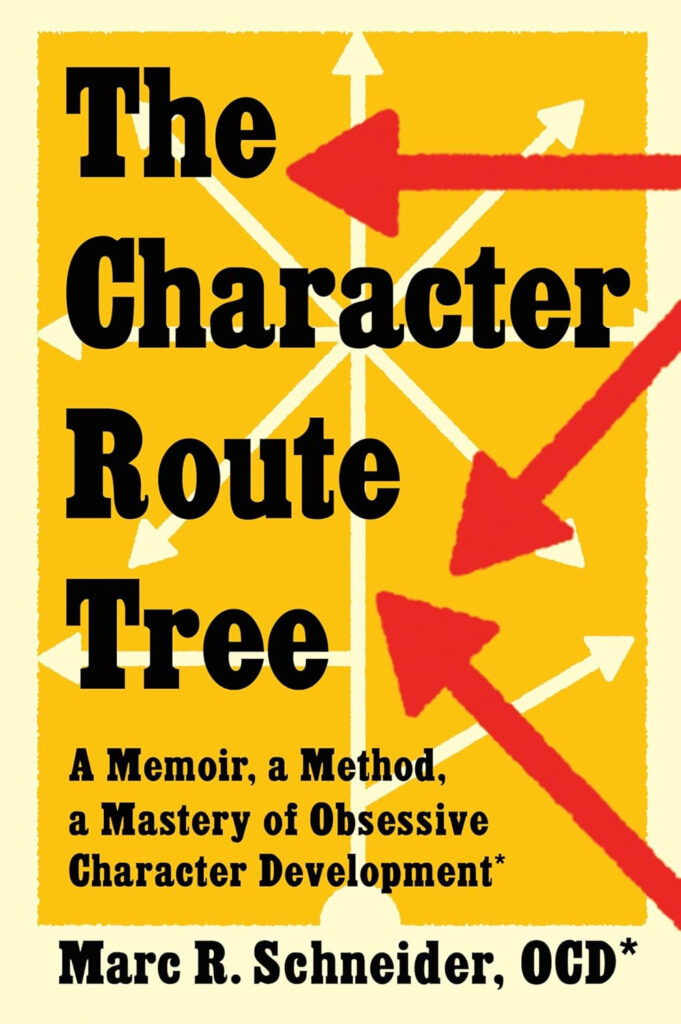
A self-help guide focused on the development of moral integrity and internal strength, The Character Route Tree: A Memoir, a Method, a Mastery of Obsessive Character Development by Marc R. Schneider is an innovative manual for growth, resilience, and situational success.
Penned by an author with a lifetime of experience in navigating the challenges of Obsessive Compulsive Disorder, this book is more than a strict resource for others with this diagnosis; it contains his remarkable personal story and the highlights of his life’s work, distilled into a usable reference for people of all walks of life, not only those with neurodivergent conditions.
The text is broken down into three distinct sections – “The Yearbook,” “The Playbook,” and “The Workbook” – representing his personal journey since childhood, the methodology he has developed over five decades, and a practical manual for implementing those critical techniques. The Yearbook details the author’s richly remembered life, from Big Wheel rallies in his neighborhood and adolescent crime to the embarrassing emissions of puberty and his life-altering introduction to football, the sport that would guide and shape his life.
Year by year, Schneider leads readers through his triumphs and tragedies, the moments that both alienated and uplifted him, resulting in an exceptionally detailed and vulnerable memoir. Gradually, we learn about the self-destructive tendencies, unhealthy patterns, and compartmentalized pain that sometimes threatened to overwhelm his efforts to lead a “normal” life. The bulk of the book is then aimed at teaching readers how to be receptive to their own character, master the nuances of their mind, and utilize the fullness of their unique personality.
Through a number of useful lenses, including football, film, and writing, Schneider introduces his original methodology for personal development and character-building, offering real-world proof from his own lived experiences and myriad challenges. Being “obsessed with control, perfection, and approval,” he developed a number of strategies that allowed him to embrace his potential and overcome negativity. The nine routes introduced in the second section – “The Playbook” – include prioritizing your passions, connecting with like-minded people, and overcoming your fears and insecurities. Similar to the interactive nature of “The Playbook,” “The Workbook” portion offers hundreds of ideas and potential tools for self-soothing, each listed in the form of Acronym (e.g., DOWN, Disrupt Optimism with Negativity).
As the author prefaces at the top of the book, his writing is raw and largely unedited, providing an intimate glimpse into the overlapping thought processes and methodical perspective of OCD and neurodivergence. Some concepts tend to be reiterated more than necessary, and there are also some archetypal pieces of advice that could be covered on a less superficial level. That said, the undiluted honesty of the prose more than makes up for the expositional padding or patterns of redundancy.
Those who aren’t a huge fan of sports may grow weary of the consistent football metaphors, but they do provide a useful reference point in most cases. Small execution issues aside, Schneider has helped to give voice to the voiceless and vulnerably share an overlooked perspective. Compassionate, immersive, and engaging, the book provides a philosophical and psychosocial treatise that is inspiringly unique in the genres of both memoirs and self-help.
Book Links






STAR RATING
Design
Content
Editing
Get an Editorial Review | Get Amazon Sales & Reviews | Get Edited | Get Beta Readers | Enter the SPR Book Awards | Other Marketing Services




















Leave A Comment