

 Imber is Deborah Mistina’s award-winning debut novel. Deborah has a master’s degree in human development and lives with her husband under the starry skies of semirural Ohio. When an extended illness prematurely ended Deborah’s successful career as a learning consultant, she shifted her focus to writing a story that she had been itching to tell for years. Treating the abrupt change as an opportunity rather than a defeat, she channeled her characteristic energy and optimism into fulfilling a lifelong goal and crafting an engaging tale about finding the light in dark times.
Tell us about your book.
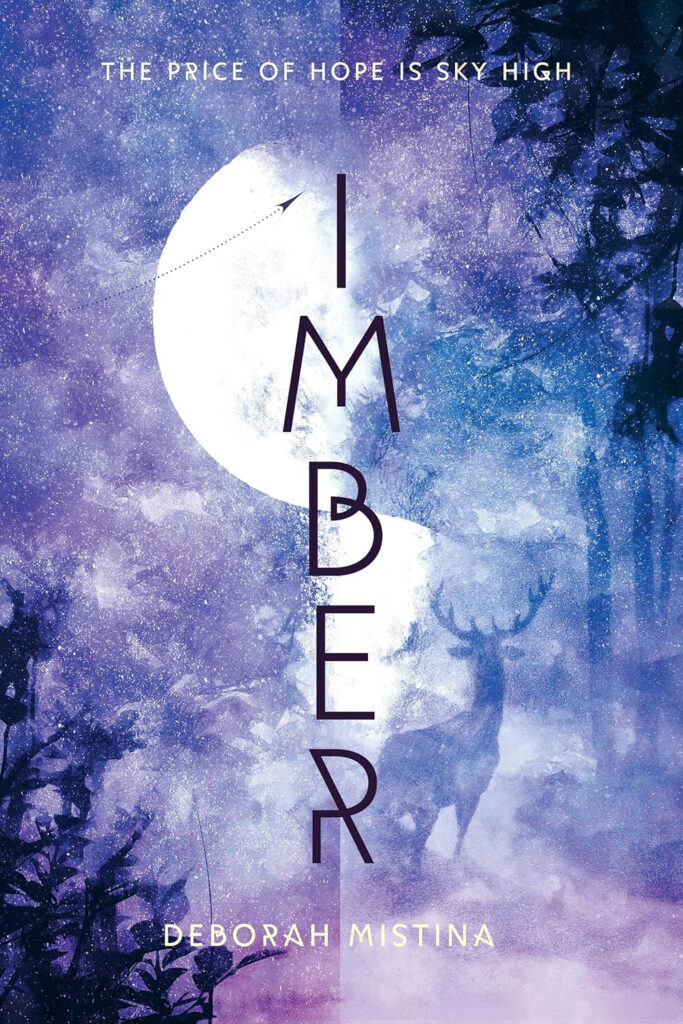
Imber is a dystopian sci-fi thriller set in a future shaped by environmental collapse and political secrecy. The story follows four strangers who discover they are connected in an unexpected way, drawing them into a shared effort to unravel a government deception with far-reaching consequences. The novel explores resilience, justice, and the courage of ordinary people. It looks closely at our fragile relationship with nature – and with each other – and how hope can sustain us in difficult times or be used for manipulation and control. At its core, Imber is both a cautionary tale and a love letter to the natural world and to those who would fight to protect it.
Why did you want to write a book?
Stories have long been an important source of escapism and inspiration for me, and I wrote Imber with the goal of entertaining and moving others in a similar way. I’ve always loved to write, but my career left little time to focus on it. When I had to close my consulting business a few years ago due to an extended illness, I chose to turn that situation into an opportunity to create Imber.
 Would you self-publish again?
Definitely. I’ve had a very positive experience with self-publishing. I especially value the control it gives me over my work and the ability to bring a book to readers on a much shorter timeline.
What tips can you give other authors looking to self-publish?
Research the process in advance. Take the time to understand how self-publishing works, and develop a plan to guide you. Also, hire experienced professionals, such as editors and cover designers, to support you. Don’t try to do everything yourself. Working with experts can make a significant difference in the quality of your book.
As a writer, what is your schedule? How do you get the job done?
I spent most of my career in the corporate world, so it’s deeply ingrained in me to keep structured hours. I try to follow a regular writing schedule, but I don’t force it. I’m a very organized writer. I maintain detailed notes and outlines that help me track things like timeline and continuity – whether a scene should take place during the day or night, or how much time has passed. Mapping everything out in advance prevents inconsistencies and allows me to stay focused when I’m actually writing chapters. My process is iterative. I’ll write for a while without self-editing to get the ideas down, then go back multiple times to refine and polish.
How do you deal with writer’s block?
I don’t spin my wheels. If I hit a roadblock, I set my writing aside and come back to it later. I find that approach leads to stronger storytelling.
Tell us about the genre you wrote in, and why you chose to write this sort of book.
I didn’t set out to write science fiction, though it’s a genre I have always enjoyed. I didn’t begin with any particular genre in mind. Instead, I followed where my story, characters, themes, setting, and pacing led me – and that path ultimately shaped the book into a dystopian sci-fi thriller. I’m proud to be part of a genre that includes so many other books I love.
Why did you write about this particular subject?
For as long as I can remember, I’ve had an affinity for wildlife and wild places. The initial spark for Imber grew out of the idea that humanity has a profound connection with nature. I wanted to explore what might happen in a future where that connection is strained to a breaking point.
What’s next for you as an author?
I would love to write a sequel to Imber. I’ve roughly outlined it, but I haven’t started writing in earnest yet. Right now, I’m focused on helping Imber find its audience. If there’s interest, I would be excited to continue the story.
What does your book’s title mean?
Several of the place names in Imber are derived from Latin, and the title has Latin roots as well. Based on my research, the Latin word “imber” does not have a modern English descendant. It meant rain shower, but it could also refer to a shower of missiles or a stream of tears. I loved the multiple meanings and how they all connect to the themes of my book. It felt like a perfect fit.
Author Links





Get an Editorial Review | Get Amazon Sales & Reviews | Get Edited | Get Beta Readers | Enter the SPR Book Awards | Other Marketing Services


















Leave A Comment