

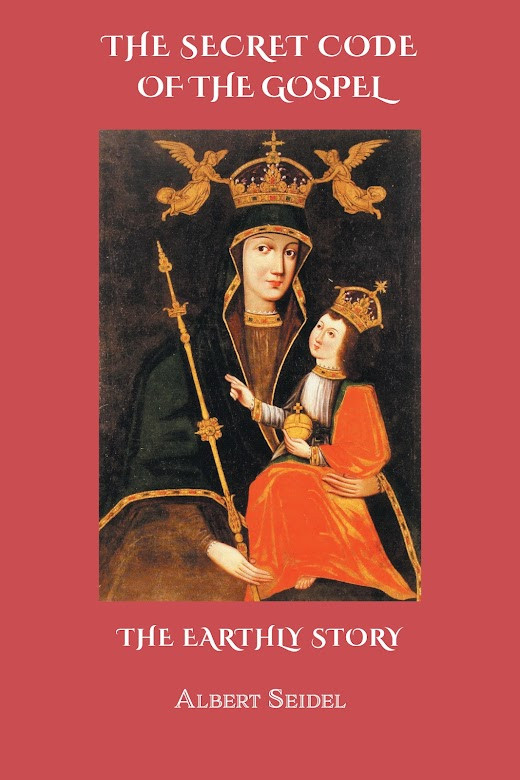
A logic-based assessment of the earthly history of Jesus and the cornerstone events of the Bible, The Secret Code of the Gospel: The Earthly Story by Albert Seidel offers a refreshingly pragmatic perspective on faith-based mysteries.
Examining the Gospels as religious reflections on historical events, Seidel attempts to parse fact from fiction and clear up some of the core questions surrounding Christianity’s origins, primarily the life and death of Jesus Christ, beginning with whether he truly existed. The preface clearly states the author’s approach to interpreting the Gospels: Jesus was an actual historical figure, and the Gospels are religious interpretations of earthly events that their authors either personally witnessed or transcribed based on other people’s accounts.
From that foundational lens, Seidel dissects many of the most well-known stories and elements of the Gospels, from Jesus’ resurrection and the nativity scene to the Wedding at Cana and Jesus’ complex familial and romantic relationships. Presenting alternative explanations for the sometimes supernatural events that lie at the heart of Christianity, one logical clarification builds on the last.
For example, perhaps Jesus wasn’t resurrected from the dead, but rather, his title of King of the Jews was passed on through his unborn son, the Child of Mary Magdalene. Given that premise, the legendary story of an infant born in the manger and persecuted by the authorities could be explained as Jesus’ heir being born to Mary Magdalene and her new partner, Joseph. One of the central arguments the book makes is that Jesus the Preacher and baby Jesus could, in fact, be two different people, conveniently synthesized into one by the authors of the Gospels with an eye towards unifying people around a powerful godhead.
For Christians and anyone familiar with the religion, these are radical departures from traditional biblical interpretation, but many of the author’s arguments are sound, as are the nuanced hints and clues he uses as logical launch points. For instance, why would Jesus’ mother and disciples be invited to a wedding with him, and why would he then be in charge of handling beverage deficiencies, unless it was his wedding? And why do all four Gospels start the story of Jesus the Preacher with his arrival as an adult in Galilee, along with the next three miraculous years of his life, without acknowledging his previous three decades?
Granted, some parts of this text are necessarily based on supposition, and require some ironic leaps of faith, but the idea that Jesus was predicting and carrying out his own well-crafted plan begins to sound less conspiratorial with each passing chapter. That said, some of the author’s choices are questionable, such as his hesitation to use evidence from other historical or religious materials – e.g., Coptic texts – to help validate or disprove events outlined in the four Gospels.
Overall, Seidel’s detailed textual references to the Gospels grant credibility to his thesis, and his attempts to reconcile religious lore with historical fact feel driven by academic curiosity, rather than heretical malice. While some readers may find this text inherently blasphemous, others may find it cathartic and revelatory; in either case, this intuitively structured and comprehensive take on the heart of Christianity is thought-provoking and eye-opening.
Book Links






STAR RATING
Design
Content
Editing
Get an Editorial Review | Get Amazon Sales & Reviews | Get Edited | Get Beta Readers | Enter the SPR Book Awards | Other Marketing Services


















Leave A Comment