

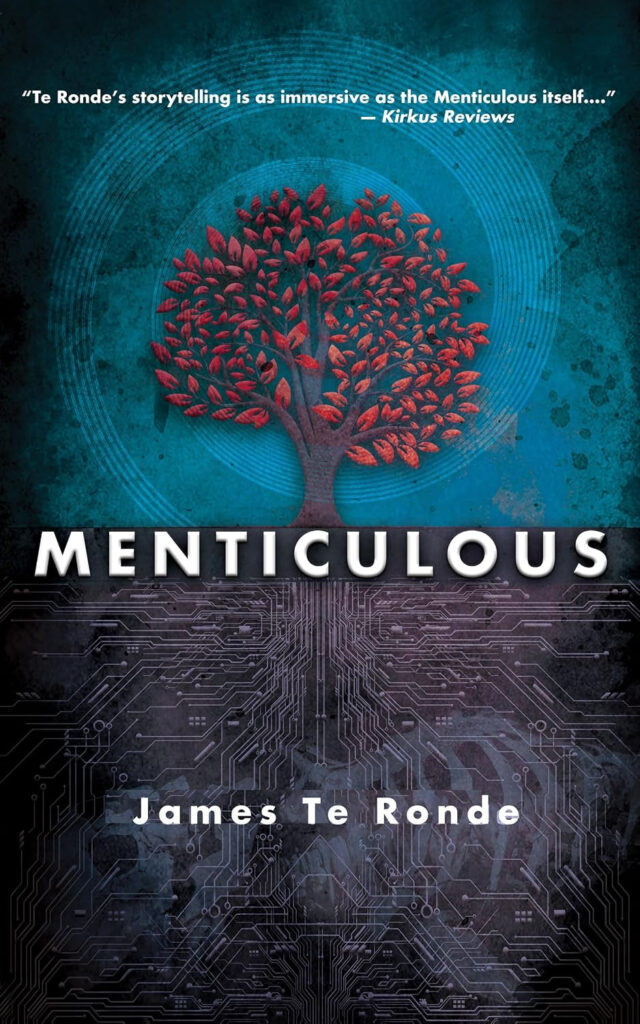
Unsettling, imaginative, and laced with dystopian warnings, Menticulous by James Te Ronde is a surreal dive into the dark side of technology and a grim warning for our collective future.
Cooper Timm’s dreams have seemingly hit a dead end when he’s offered a job with ProGnosys Corporation, a massively powerful tech company shrouded in secrecy, but lauded with clout. In a remarkable redirection of fate, Coop is put in charge of the Menticulous – an impossibly advanced AI machine that is practically the stuff of legend – “the Silicon Valley version of the Loch Ness Monster.”
Before he even scratches the surface of this reality-generating, logic-defying construct, one of his new team members is found savagely murdered, while another deranged dreamer lurks in the shadows, waiting for the right moment to clamber over Cooper on the corporate ladder. As the team searches for answers to riddles that might reveal the mind of God, Cooper finds himself fighting an existential battle that could reshape the future, or shatter the illusion of reality itself.
With a sharply pointed pen, Te Ronde explores and exposes the cutthroat world of tech giants and the bleeding-edge advancements that shape modern life, taking aim at a near-future that is unnervingly close. The concept of an artificially intelligent machine tapping into the depths of our psyche to warp our perspective on reality and wreak havoc on our mental health is now closer to science fact than fiction, so the book feels as if it’s tapping into the greater zeitgeist.
Te Ronde artfully injects suspense and uncertainty into this disquieting but intriguing storyline, forcing readers onto their toes in terms of discerning reality, hallucination, and next-gen simulation. By introducing an element of disbelief into the writing itself, or casting doubt on the veracity of characters’ described surroundings or experiences, the narrative is elevated to a dynamic puzzle, one that will capture the imagination of fans loyal to multiple genres. The visceral descriptions of the Menticulous landscape are mind-boggling and cinematic, while its enigmatic role in the plot makes it something of a MacGuffin, with the struggle over who controls it and what purpose it ultimately serves providing much of the plot-driving tension.
On a larger structural note, while the story is highly focused on the plot, backstory, exposition and action, it occasionally lacks in character development outside the core protagonists. Similarly, there are some formalities in the writing that make the prose feel stilted, which doesn’t allow the plot or characters to feel fully alive. For example, the repetition of “Corporation” after Prognosys doesn’t reflect the contemporary manner that most people speak in tech realms, where expediency is valued. For readers to fully immerse in a sci-fi drama, the characters should never seem perfunctory, archetypal, or merely plot-driving.
In general, a further developmental edit could help naturalize speech, narration, and internal dialogue, cut down on overloaded exposition, and help drive the pace of the story. Despite scattered execution issues and a slight imbalance in story-craft, the prescient storyline delivers an old-fashioned, nail-biting thriller, encapsulating many of today’s societal fears.
Book Links




STAR RATING
Design
Content
Editing
Get an Editorial Review | Get Amazon Sales & Reviews | Get Edited | Get Beta Readers | Enter the SPR Book Awards | Other Marketing Services













Leave A Comment