


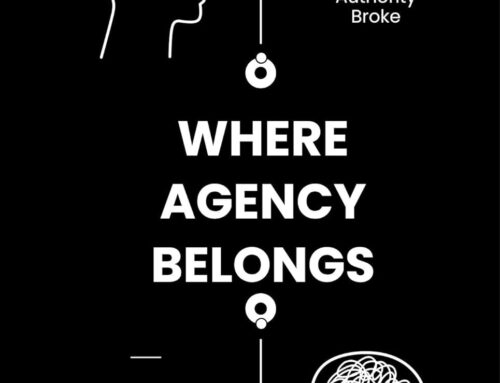
A revelatory examination of internal and interpersonal conflicts, Wait, Where Am I In This? by Lee Long, EdD, LPC-S is an insightful guide to help navigate, deepen, and strengthen relationships with other people, and with themselves.
Rife with unfiltered confessions and painful moments of recognition, the text examines why we think the way we do, and offers alternative pathways for our mindset, feelings, reactions, and behaviors. People struggle in their relationships for myriad reasons, whether it is shrinking themselves to fit a desired image, repeating patterns of abandonment from childhood, letting trauma responses drive reactions, living out unwanted narratives, or failing to maintain their values, just to name a few.
The underlying purpose of the book is the development of an interpersonal lifestyle, in which a person strives to deeply understand their own personal space and boundaries, and thus achieve self-maturity. Many people cannot control their environment – the city where they live, their present financial burdens, the career path they’ve chosen, or the swirl of co-workers, neighbors, and acquaintances that surround them – but Long argues that we are ultimately in control of our influence, our attention, our energy, and our reactions.
Drawing on more than three decades as a therapist, the author sheds light on the common patterns and stumbling blocks that affect relationships of all kinds by sharing anonymous therapeutic vignettes from his professional work. With anecdotal proof from a kaleidoscope of his patients, Long makes a compelling argument for interpersonal focus, rather than external management. The focus isn’t merely on positive affirmations, but on fully examining the problematic corners of behavior; by delving into some of the most vulnerable spaces of self, the stories and exercises may stir up intense feelings, but that sense of unflinching self-reflection is the challenging cost of self-knowledge.
At this point, the author contends, it becomes possible to establish meaningful connections with other people. Attempting to strip away all the inauthentic masks and mechanisms that we meticulously craft for ourselves, the author patiently dissects the negative patterns that affect us all – our judgments, opinions, intrusive thoughts, deflections, logical gymnastics, and activation responses. This central idea of prioritizing self-knowledge and discovering one’s authentic self is a concept that is both essential and timely, particularly in an era when myriad forces and systems are constantly competing for our attention and exerting their influence on our self-image.
A reader who tackles this book from cover to cover may note some repetitive elements in the text, including certain phrases and broader concepts. This is not necessarily an oversight of editing, but rather a conscious accentuation of critical points, in an attempt at rigorous reinforcement, but at times it feels like there may be a fine line between the two. On balance, this method of repetition is effective; when deconstructing patterns ingrained over a lifetime, and unearthing the authentic self buried beneath, some redundancy is required to ensure retention.
Well-balanced with bullet-point lists, referential questions, interactive materials, and explanatory personal narrative, the book is uniquely structured and affecting. While many works of self-help focus on what the reader should be doing, Long focuses as well on what other people have done to navigate their way back to health and happiness, reminding readers that they are not alone in the experience, which is an enormous part of the battle.
Book Links







STAR RATING
Design
Content
Editing
Get an Editorial Review | Get Amazon Sales & Reviews | Get Edited | Get Beta Readers | Enter the SPR Book Awards | Other Marketing Services














Leave A Comment