

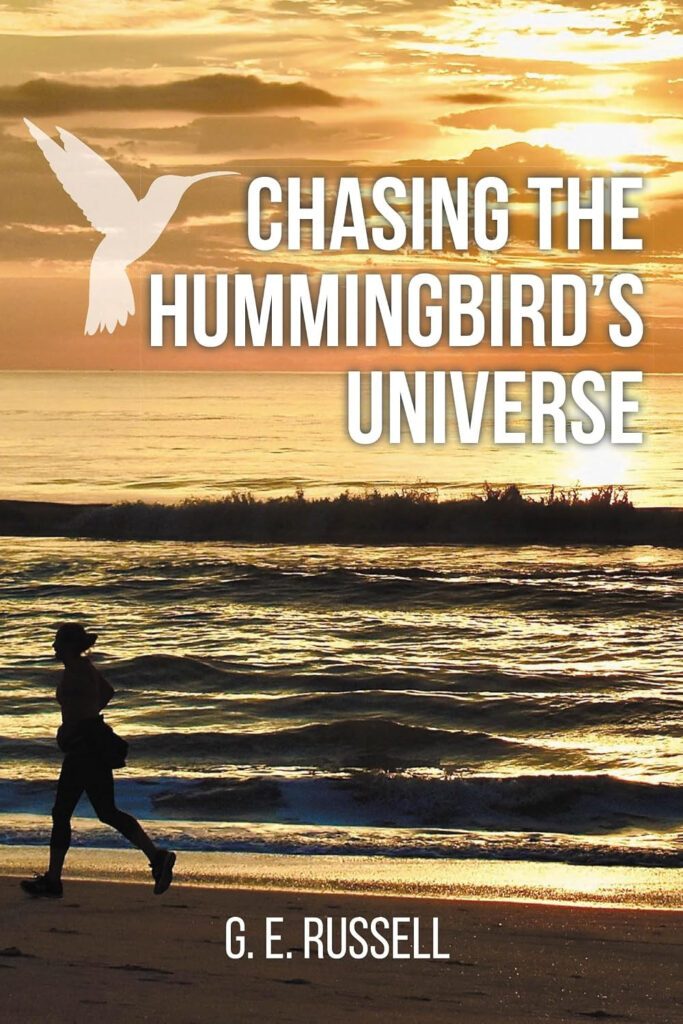
A spontaneous getaway turns into a life-changing revelation in Chasing the Hummingbird’s Universe by G.E. Russell, an unassuming but inspiring read that makes a compelling argument for personal reinvention.
When therapist Miranda Stevens receives an unexpected getaway invite to Mexico, she doesn’t know what to expect from her friend, Katy Girard, a high-powered financier in Manhattan. Miranda imagines a week of relaxing on the beach, soaking up some luxury treatment in their top-floor suite, and catching one another up on their busy, bustling lives, but it doesn’t take long for the darker truth to emerge. Katy is navigating a deadly storm of emotional turmoil, loneliness, and depression, and her pain has driven her to desperation.
Over the course of their tumultuous and tear-stained trip, they earnestly discuss Katy’s past and present, processing the turning points that have marked and changed her life, with Miranda attempting to offer clarity, comfort, and support. During oceanside cocktails and exquisite meals, they explore family dynamics and buried trauma – breakfasts on the patio and bustling market squares become impromptu therapy sessions about relationship red flags and the importance of trusting yourself.
Between these intense emotional conversations, there are also lighthearted moments that aren’t laden with such poignant intensity, including the friendly flirtations of Templeton O’Rourke, a fellow guest at the resort who accidentally becomes enmeshed in their vacation. Through unexpected connections, confessions, tiffs, and tragedies, these three characters fall into a fascinating orbit of intimacy, and come out of their tropical escape with new perspectives and opportunities to turn their heartache around.
The book tells a familiar tale for many people in our contemporary age – being depressed by your own inexplicable unhappiness, despite doing everything “right,” which can frequently lead to professional burnout, relationship collapse, mid-life pivots, or the complete breakdown of one’s mental health. The emotional landscape of the story is established early and remains consistent – heavy subjects being unpacked in beautiful places, a juxtaposition that offers an important contrast for exploring personal obstacles.
Katy embodies a common state of malaise with her initial unwillingness to engage with others, her persistent and irrational insecurities, and the emotional vulnerability of someone unpacking years of trauma and truth. Miranda’s role begins as a shoulder for Katy to cry on, but as more of Miranda’s own past comes to light, readers find that she is on her own journey of recovery, and her appearance of success and stability doesn’t mean she is free from her own demons. The same is true of Temple, who quietly wrestles with his own sources of regret, shame, and grief, despite the confident and chiseled face he shows the world. Each character brings their own baggage and insight, making their stories broadly accessible, which causes the reader to look inward.
On a technical level, the prose is neatly edited, though there are some passages and chapters that are given too much focus, such as Temple’s jarringly tragic fishing excursion. Occasional moments in the dialogue also feel too scripted to be fully believable, but the majority of the conversations feel deeply authentic. All told, these are minor issues in a finely tuned novel.
Layered with relatable philosophy and therapeutic wisdom, as well as brutally honest depictions of our most shameful sorrows, this novel is a powerful testament to friendship, self-knowledge, and the long road to healing.
Book Links






STAR RATING
Design
Content
Editing
Get an Editorial Review | Get Amazon Sales & Reviews | Get Edited | Get Beta Readers | Enter the SPR Book Awards | Other Marketing Services

















Leave A Comment