

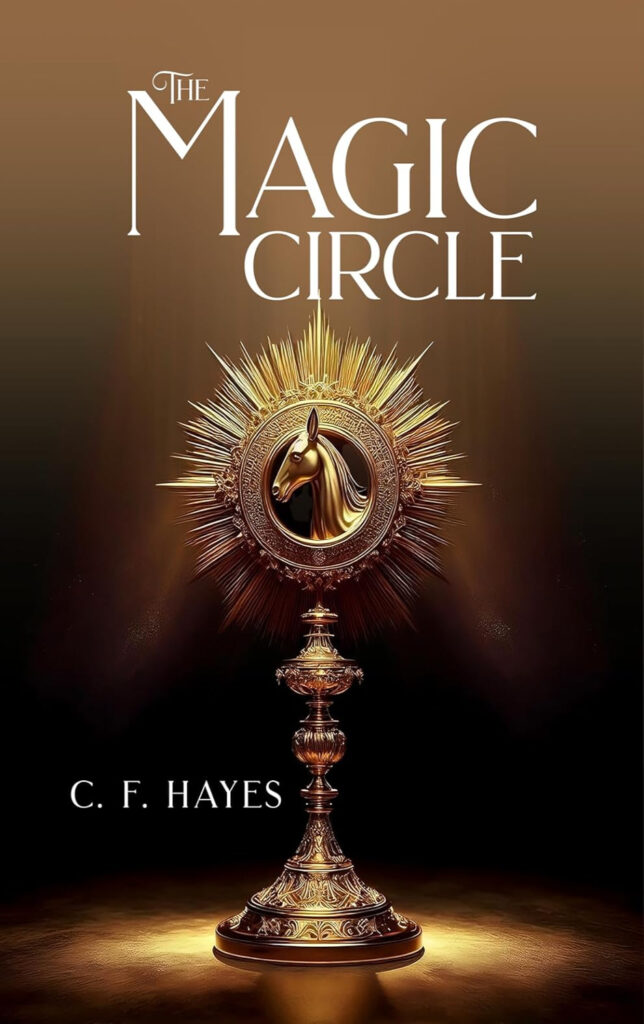
A shocking recollection of abuse, power, and repression in one tragically brief life, The Magic Circle by C.F. Hayes is a stirring portrait of emotional processing and the dark secrets we carry too often to the grave.
Following her sudden death, Mary Armstrong’s diary passes into the hands of an old friend, one who never expected to find it full of haunted memories, taboo secrets, and philosophical streams of intense exploration. Layered with intimate confessions about her earliest sexual experiences, including shocking revelations about her father, a prominent conservative Senator, this journal becomes a gateway to Mary’s imaginative and undeniably fractured inner world.
One of the most controversial aspects of the diary sits firmly at the core of this novel: equating God and sexual climax. Beginning from that foundational lens of sex and worship, developed through years of theological sermonizing, the symbolic undertones in religion, her own history of incestuous abuse and its consequent psychological damage, the story expands outward, inviting readers into an unflinching stream of uncut reflection.
As detailed in her diary entries, Mary’s attempt to make sense of the world led her to form connections between everything – female anatomy, racism, the Civil War, motherhood, death, resurrection, Disneyland, Walt Whitman, etymology, and so much more. The resolute link between godhead worship and climax impacts many of Mary’s other belief patterns and relationships, from anti-Semitic opinions and misreadings of Scripture to racist dogwhistles and oddly skewed perspectives on death. This variety of subject matter creates a searching quality to the writing, a limitless query into why we are the way we are, which takes shape through the myriad anecdotes from Mary’s life, as witnessed second-hand.
Understandably, there are a number of triggering subjects in the text, which may be difficult for some readers to consume without recoiling; the titular “magic circle” itself is a reference to sexual assault, the defining betrayal of Mary’s childhood. While the notes from her diary are explicit, the narrator’s discussion of those ideas can be even more intense, particularly her attempts to interpret Mary’s mental state and dissect her trauma responses. Themes of power, control, secrecy, shame, bigotry, and trauma are tackled bluntly, often blindsiding readers in the form of jarring hot takes on everything from monarchical rule and Washington’s monuments to temporal lobes and Armageddon.
As a result, this disquieting story feels both timeless and timely; patriarchal subjugation of young girls is nothing new, and the international spotlight has shown how widespread it is in the halls of power. Keeping track of these occasionally surreal recollections and bursts of comprehension is no easy feat, but for readers who enjoy dense experimental fiction, this book is deeply rewarding.
In terms of technical execution, there are scattered spelling errors, incorrect punctation, formatting inconsistencies, and tense shifts, so a surface-level proofread is recommended to eliminate these stumbles from an otherwise delicately constructed narrative. Despite sporadic issues with organization, and a stream-of-consciousness style that can be slippery to follow, the author fearlessly throws open the door to a raw and soul-stirring confession, for a profoundly unique and affecting novel.
Book Links




STAR RATING
Design
Content
Editing
Get an Editorial Review | Get Amazon Sales & Reviews | Get Edited | Get Beta Readers | Enter the SPR Book Awards | Other Marketing Services









Leave A Comment