

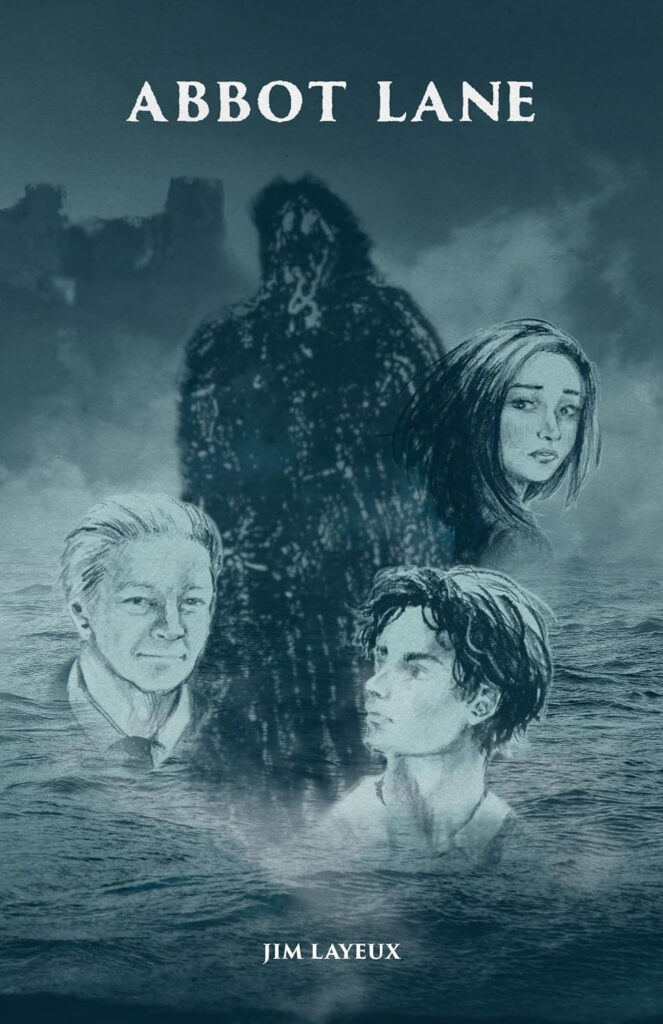
A slow-burning drama that crackles with contemporary fears and timeless heroics, Abbot Lane by Jim Layeux is a forceful spy-vs-spy thriller.
An existential threat to America has been identified, and “a highly placed official within US intelligence is hellbent on destruction.” In order to prevent a global holy war, reluctant college student Jesse Carlton is recruited by an aging intelligence agent, Lee Tondar, who moonlights as a history professor at the secretive Grissim Institute.
Plunged overnight into the bewildering world of international espionage, Jesse is tasked with quietly investigating the flow and unprecedented censorship of intelligence reports to Tondar’s particular communication station, hoping to identify a traitorous puppet master through a deadly process of elimination. As a tangled cast of suspicious figures spirals ever closer to colliding, Jesse infiltrates the operation of a potential terrorist, but a nuclear attack on American soil is imminent, and time is running out.
From a thematic perspective, the book is relatable and aligned with a contemporary disillusionment with overpowered governments and the rise of surveillance states. There are some nostalgic nods to cloak-and-dagger espionage thrillers of the past, but this story also feels sharply modern in terms of technological integration and domestic tensions.
William Penther and his ominous militia of disillusioned Americans feel eerily familiar – angry anti-government rhetoric fueled by the dramatic disappearance of blue-collar jobs is fertile ground for exploitation and violence. This torn-from-the-headlines plot delves into issues of “terror,” black flag operations, rogue agents, and the essential sacrifices of average citizens who are willing to fight for liberty.
While the story is viscerally recognizable, there is often a lack of emotional variation in the writing, which gives action-packed scenes a similar energy to less urgent moments of plot progression. This procedural style of writing keeps the pace of the story high, but the lack of distinct peaks and valleys, along with the frequent time jumps, makes it difficult to keep the story-building straight, particularly in the first half of the novel, as myriad characters and nuanced pieces of the proverbial puzzle are being established.
Presenting a mosaic of players and slowly entwining their tales is a popular structure for suspense novels, but readers need to be hooked by the early vignettes to ensure engagement; in this story’s case, the writing is too inconsistent and scattered, with tangential conversations that don’t drive the core of the story forward. Certain elements of the imaginative storyline are original, and the prose is imbued with a gritty edge, but the writing has too much filler overall – peripheral descriptions and dialogue that don’t fit the plot or character development – forcing readers to separate wheat from chaff as the plot unfolds.
There is also a steady stream of typographical errors (achievement’s/achievements, it’s/its), misspelled words (devise/device, dot/do, peeked/piqued), and absent punctuation that regularly disrupts the flow of the narrative. An aggressive proofread is necessary to catch these unpolished passages and frequent errors, which would immediately sharpen the otherwise intriguing storytelling.
Despite these unfortunate execution issues, this remains an ambitious and sweeping novel that bends genre norms and keeps readers guessing with every sinister twist.
Book Links





STAR RATING
Design
Content
Editing
Get an Editorial Review | Get Amazon Sales & Reviews | Get Edited | Get Beta Readers | Enter the SPR Book Awards | Other Marketing Services










Leave A Comment