

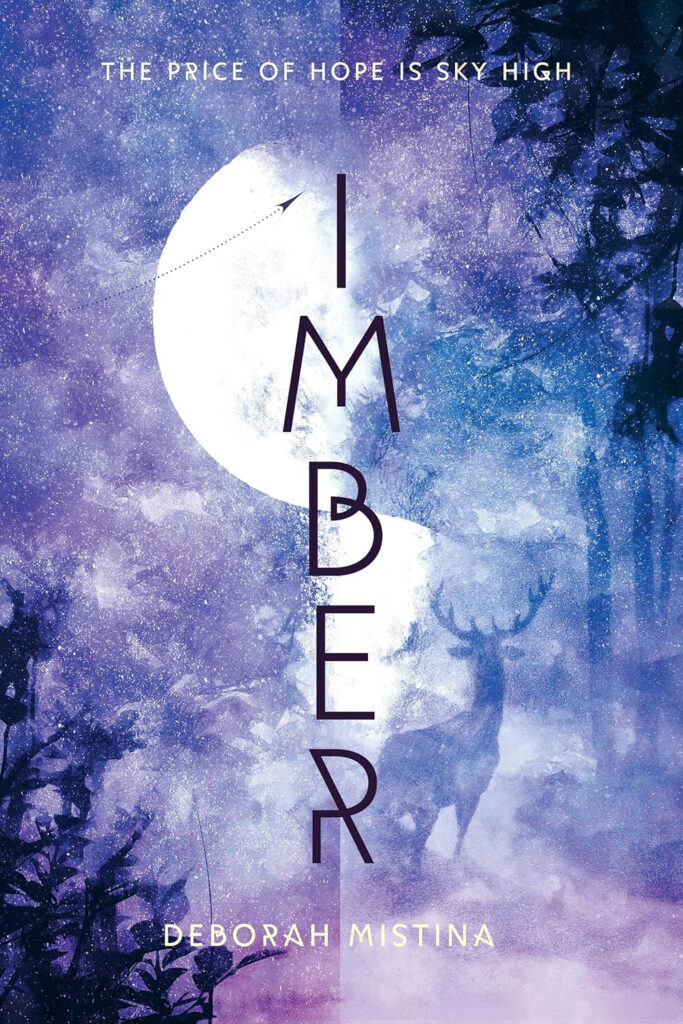
A thought-provoking parable about the uncertain future of life on Earth, Imber by Deborah Mistina is a serious sci-fi drama with a helping of psychic intrigue and existential stakes.
Centuries in the future, the population of a tectonically erratic and disaster-ravaged Earth has all but given up on their home planet. A charismatic but corrupt leader has risen to power on the promise of an interplanetary exodus, but this utopian quest seems much closer to a pacifying dream than a legitimate reality. Against this backdrop, an unlikely cadre of strangers discovers their potential role in Project Pioneer – the imminent relocation of humanity.
Violet, Jack, Emily, and Mason may lead very different lives, but their newfound “empathic telepathy” with other people and animals brings them together online. As their camaraderie grows, they begin to collectively sniff out a conspiracy; something about the recent census smells off, as does the propaganda around the long-awaited sojourn to space. The diverse cast of core characters provides a wide view of the conditions of this harsh future: a horse-loving farmer with advanced degrees, a feline fanatic from the Infrastructure Bureau, a bird-watching preservationist who lives topside, and a former hunter from a proud family fallen from grace.
The exposition of this dystopian setting unfurls slowly, in narrative asides and offhand lines of prose, but readers gradually develop a visceral vision of Earth’s future as a flooded husk turned hostile to life. The technological sci-fi elements are more subtle, but also quite relatable, such as the symbiotic similarities of Digital Companions (DCs) and today’s smartphones, or the reality of certain foods becoming so scarce as to become prohibitively expensive or impossible to attain. These near-future elements are an effective hook in the opening chapters, particularly as this starkly apocalyptic Earth comes into focus.
Deftly exploring ideas around the degradation of the physical world, radical evolution, and the meeting point of science and human nature, this book tackles keenly relevant topics about sociology, technology, and the looming devastation that climate change represents for our planet. The search for a new Eden is not alien to contemporary readers, nor are the manipulative tactics of apathetic politicians more interested in self-preservation than civic duty. Each character’s perspective provides additional depth to this multilayered premise, reminding readers that no one is coming to save us but ourselves.
The prose and plot-mapping are urgent and alive; there is a playfully poetic edge to the writing, signaling a confident author whose storytelling skill is matched by her mastery of obscure vocabulary that perfectly fits a moment or mood. The descriptive language is both vivid and calculating, capturing blasted landscapes and tortured spirits alike. The prose is also laden with prophetic hints about exit ramps to inevitable disaster, from species disarmament and global goal unification to warnings about assimilation and the homogenization of culture: “As if pretending everybody is the same, trying to make us the same, will prevent future wars and catastrophes.”
There are some dialogic moments that feel stilted, and internal monologuing that spoon-feeds plot developments, but these heavy-handed instances are the exception, not the rule. Creative, timely, and ultimately optimistic, this is a piece of visionary fiction that stands out from the field of speculative dystopian sci-fi.
Book Links






STAR RATING
Design
Content
Editing
Get an Editorial Review | Get Amazon Sales & Reviews | Get Edited | Get Beta Readers | Enter the SPR Book Awards | Other Marketing Services













Leave A Comment