

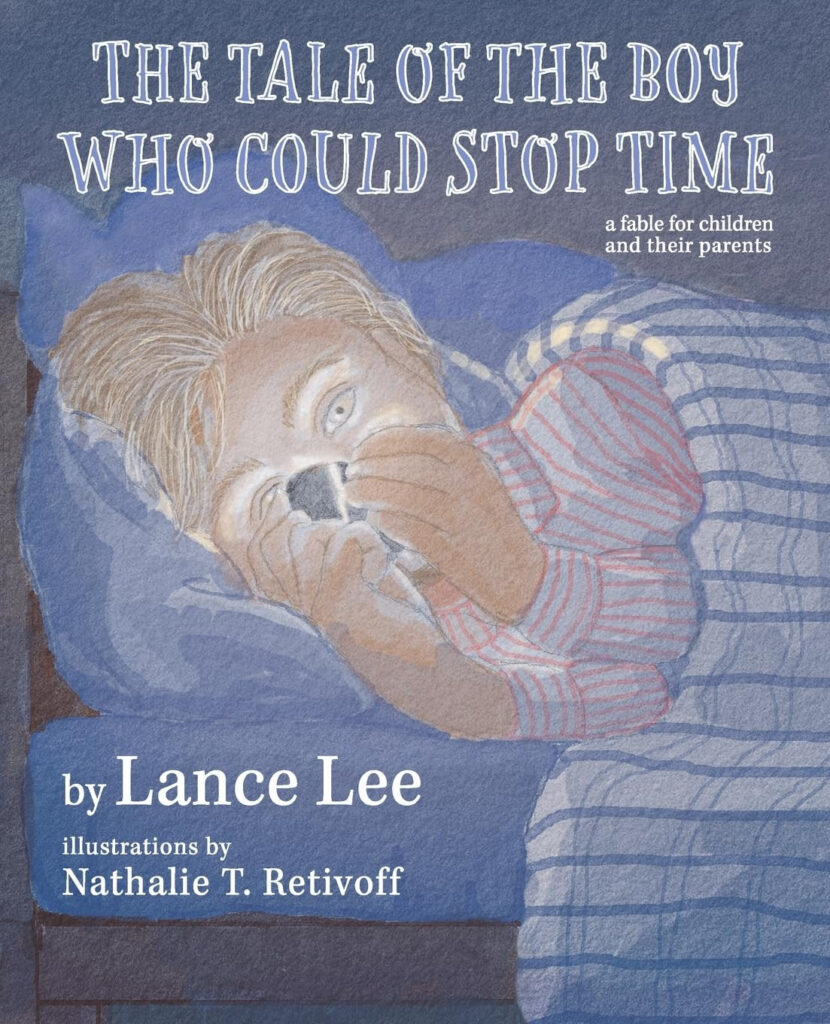
A contemporary fable about the silent burdens we bear, our desire to be known, and the powers we each possess, The Tale Of The Boy Who Could Stop Time by Lance Lee is a touching tale from a gifted storyteller.
10-year-old Peter has a gentle heart and a magical way with words, but those skills do more harm than good when dealing with bullies at school. When a strangely knowledgeable neighbor named Merlin of Crouch End presents him with an odd trinket – a stone with a lightning bolt down the middle – Peter is shocked to discover that it grants him the power to freeze time.
Peter uses this newfound ability to outwit his bullies and protect those in danger – enjoying the strength, confidence, and control the magic stone has seemingly unlocked. However, he gradually learns that he doesn’t need to stop time in order to stand up for himself, stand out from the crowd, and make his voice heard. Peter finally has the chance to show off his non-magical talents and finds the right words to unmask his tormentors, no magic required.
This charming story explores the nuanced subjects of self-confidence, bullying, emotional intelligence, kindness, curiosity, personal growth, and healthy methods of anger management. The mystical elements and the facilitating presence of Merlin move the story and add a dash of whimsy, but the moral and emotional underpinnings of the plot are where the magic truly happens. The lessons are delivered with clarity and purpose, while being well-concealed in the compelling time-stopping storyline, which is plenty gripping on its own, and then draws children into the real message at its core.
As a long-form fable that comes in at under 100 pages, every word is precious; each scene, description, and exchange of dialogue should be purposeful, and there are some tangential lines and paragraphs that could be trimmed, while other exchanges and scenes deserve more space. There are also occasional moments in the plot that seem misplaced, such as Mrs. Longchin taking the position that Peter needs to deal with bullying “on his own,” or Peter’s internal denial that he stopped time after the second incident with the stroller, which is unnecessary and somewhat frustrating, especially for younger readers.
Retivoff’s illustrations are remarkable and custom-crafted to the plot, with many feeling evocative and helping to move the story along, such as the street scene before Peter’s curbside heroics. The illustrations are occasionally inconsistent, such as the drawings of houses and landscapes, while the sporadic black-and-white line drawings are also less impactful than the color images, especially when placed in direct succession, e.g., Mrs. Longchin’s portrait followed by the parent-teacher meeting. That said, the overhead shot looking down at the classroom and the rear-view portrait of Peter staring at his bedroom map are both stunning and memorable works of art in their own right.
While there is room for improvement in execution, this classically written fable is a creative mixture of Aesop and middle-grade science fiction, anchored by essential and beautifully shared wisdom.
Book Links




STAR RATING
Design
Content
Editing
Get an Editorial Review | Get Amazon Sales & Reviews | Get Edited | Get Beta Readers | Enter the SPR Book Awards | Other Marketing Services














Leave A Comment