

 Heath Hamrick is a Texas educator, curriculum developer, author, and lifelong storyteller. Raised in a third-generation coaching family, he grew up on football fields across the state and later became known online as Heath the History Guy. He is the co-author of Worse Than You Think: The Mostly True Story of Two Teachers Running for Congress Deep in the Heart of Texas. His latest book, Play Like He Would, tells the true story of a small-town football team, a devastating loss, and the coach who helped his players find a way forward.
Tell us about your book.
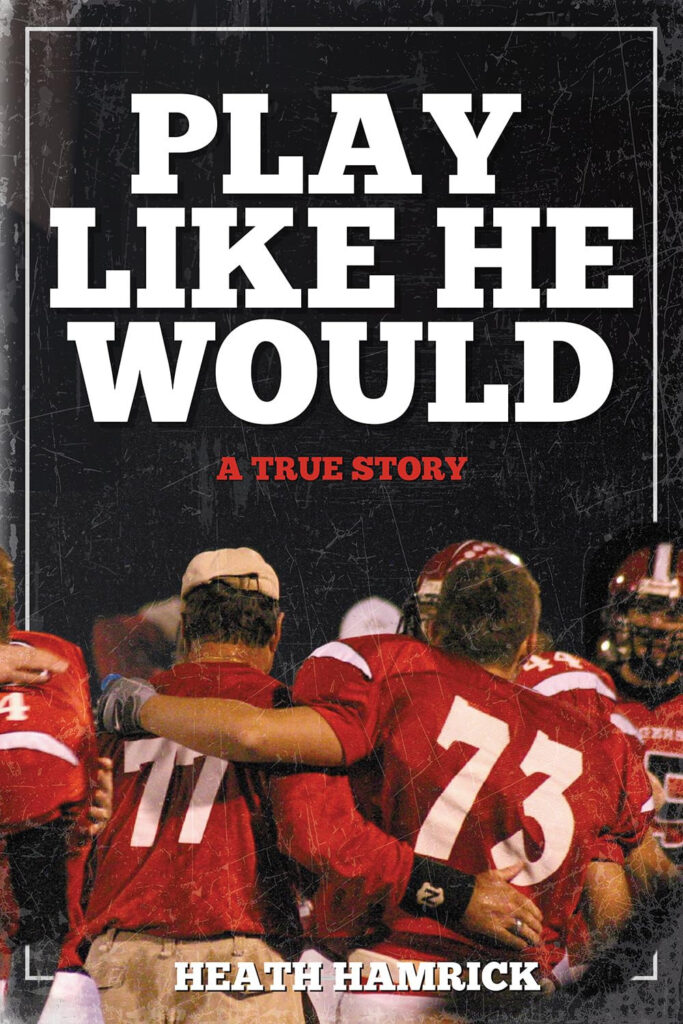
Play Like He Would is the true story of a small Texas town, a high school football team, and a sixteen-year-old player named Jason “Meat” Yancy. During a game in October 1999, Jason collapsed on the field and died from an undiagnosed heart condition, surrounded by his teammates, coaches, and community. I was standing on the sidelines that night, and my father, Jerry “Slugger” Hamrick, was Jason’s head coach.
The book follows what happened afterward: how my father helped a group of grieving teenage boys make sense of something senseless, and how they chose to finish their season in Jason’s memory. “Play like he would” became more than a football slogan. It meant never give up, never be mean, and never give less than your best. At its heart, the book is not really about football. It is about loss, friendship, coaching, fatherhood, and the ways people carry someone forward after they are gone.
Why did you want to write a book?
I wanted to write Play Like He Would first and foremost as a love letter to my father. He spent his career as the kind of small-town coach who cared far more about what happened to his players as people than what appeared in the win-loss column. He pushed them, demanded a lot from them, and wanted to win, but he also understood that his real responsibility was helping boys become good men. You don’t see that in coaches portrayed in movies or books, or at least, that is not the big takeaway – you see the more stereotyped, win-at-all-costs kind of characters straight from Varsity Blues.
There are coaches like my Dad in small towns all over the country, quietly giving their time, energy, and hearts to other people’s children, often without much recognition. I wanted to celebrate them, but especially my dad. I wanted people to understand who he is, what he gave to those players, and why the way he led them after Jason’s death mattered so much. More than anything, I wanted him to be honored simply for being the man he has always been.
 What do you think are the main pitfalls for indie writers?
I think one of the biggest pitfalls is believing that writing the book is the hardest part. After the book is finished, you suddenly have to become your own marketing department and social media manager. That is especially difficult when you do not already have a large online platform.
Social media (and publishing) tends to reward people who are already visible, so an author can produce good work and still struggle to get it in front of readers. Also, it can feel a little odd pushing people to buy your book – impolite, even, and that mindset can be hard to overcome!
What was your steepest learning curve during the publishing process?
The steepest learning curve was marketing: figuring out what to do, when to do it, and which opportunities were actually worthwhile. I had to learn the differences between reviews like Kirkus and SPR, which festivals and contests fit the book, and how far in advance everything had to be planned. Writing the book felt easier 😉
As a writer, what is your schedule? How do you get the job done?
The key is basically to write when I can, which is probably something most authors are familiar with. We have all probably found our own answers for the question of how we find that time to write while balancing work, raising a family, etc. I usually take a walk for exercise and use that time to write the next page or scene in my head. Then, when I finally sit down at the computer, I already know where I’m going.
How do you deal with writer’s block?
Again, for me, it is all about rolling it around inside my head until I find the key. Sometimes that means a lot of walks around the neighborhood with nothing to show for it but a slightly elevated heart rate. Eventually, though, I’ll find my way to what works.
Tell us about the genre you wrote in, and why you chose to write this sort of book.
In the case of this book, the genre was dictated by the content and by my presence at the event: it almost had to be a memoir. I actually did try other methods first: I wrote a fictionalized screenplay almost 20 years ago that took the more Hollywood route of a big win to wrap up the story, and got almost 150 pages into a novel version after that, but neither really accomplished what was needed.
Who are your biggest writing inspirations and why?
Every author you read adds to your style, one way or another. Stephen King and Louis L’Amour were big early influences, along with a writer of sports comedies named Dan Jenkins. Each, in their own way, made we want to keep going, keep turning pages, but, more than that, I wanted to write like them, to have that fabulous gift of storytelling (whether it be about psychotic clowns or Western heroes or just a laugh-out-loud line).
What did you learn on your journey as an author?
Weirdly enough, some stories have to wait until you become the person capable of telling them. The ideas gaining the most traction for me now are often ones I first explored twenty years ago. Time has given me the perspective to return to those old drafts and see what they were really about. Play Like He Would could not have been written properly by the twenty-year-old version of me. It needed to be written by someone who had built a family, experienced loss, and suffered enough to understand what my father and those boys carried with them.
Basically: always keep a drawer for your old stuff, because it all comes back around.
What’s next for you as an author?
After publishing in non-fiction, I’m eager to jump into some fictional worlds and storytelling. I’ve always loved history, and that is where I’m going next – specifically, to the American Revolution. I want something light and adventurous to write, something fun, so we’ll see where that leads.
Author Links





Get an Editorial Review | Get Amazon Sales & Reviews | Get Edited | Get Beta Readers | Enter the SPR Book Awards | Other Marketing Services













Leave A Comment