

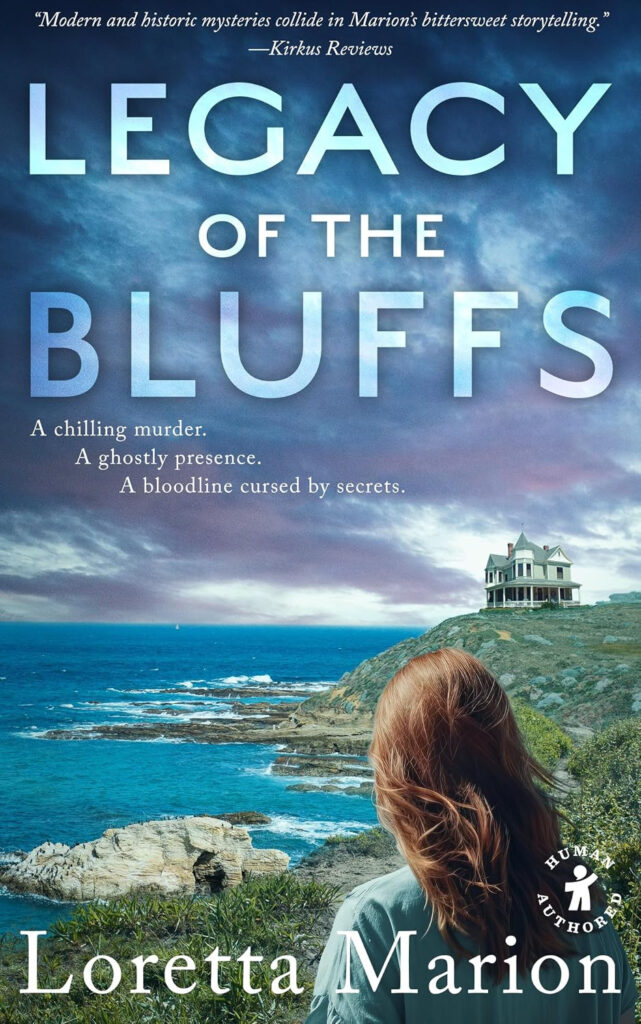
A meddling nanny, beachside murder, and another Mitchell family mystery make Legacy of the Bluffs by Loretta Marion a rollercoaster installment in the Haunted Bluffs series.
A year into juggling new motherhood, marriage to an FBI agent, and management of The Bluffs, a historic mansion in Cape Cod, Cassie Mitchell is settling into her roles with grace, bolstered by the ethereal support of her ancestors, whose spirits inhabit the halls of her spacious home. Unexpectedly, her husband hires an au pair named Abby Grant to relieve some of the pressure, but Cassie is immediately unsettled by the young woman, and the scent-sharing spirits of her great-grandparents seem to agree.
The perfect storm arrives days later when TJ, their creatively blocked summer boarder, is found dead under mysterious circumstances, landing Cassie and her husband Daniel in the middle of another fatal puzzle. After discovering that the struggling artist in her carriage house had actually been an investigative reporter, and that a local politician was linked to the tragically deceased, Cassie launches into full sleuth mode to protect herself and the long legacy of her family.
Well-paced and peppered with familiar faces from the previous two installments, the core story presents as a cozy small-town mystery, but also offers a multilayered plot, supernatural elements, and simmering suspense that is more akin to a moody thriller. The immediate drama of the murdered tenant is coupled with a murky subplot of the Mitchell matriarchs, along with the shocking revelation that one of Cassie’s fatally fated relatives may have actually been saved from the infamous family curse, creating gripping layers of intertwined plot lines that are each intriguing in their own right.
Creating a twisted web of character connections, Marion demonstrates evidence of impressive draftsmanship and a confident mastery of the genre form. With red herrings aplenty, and a propulsive, spiraling style of prose that is both accessible and intricate, this sequel has the hallmarks of classic storytelling, which resonates with relatable themes.
In terms of execution, the exposition is sometimes more explicit than necessary in explaining the thought processes, emotional stakes, or likely motivations of a character – a common conflict of telling vs. showing. One example is Marion reiterating the awkwardness between Cassie’s artistic summer tenant and the new au pair, despite having narrated their obvious discomfort and tension in the preceding lines. Similarly, while the appearance of an aroma in the house is a form of communication with Cassie’s great-grandparents, readers don’t need to be reminded of the significance of these olfactory signals each time they occur, in part because they are often so vague.
The dialogue is generally effortless and more authentic, capturing the cadence and casual slang of actual speech, which draws readers into the story with its realism. All told, though there are some stumbles in overexplaining certain elements of the novel, most of the storytelling is sharp, engaging, and neatly trimmed to maintain momentum, with moments of writing that are enthralling in their expressive concision, and an unpredictable narrative arc.
Expanding this atmospheric series and deepening readers’ love for Cassie’s relentless investigative drive, Marion delivers a powerful third chapter to this gritty and ghostly saga.
Book Links








STAR RATING
Design
Content
Editing
Get an Editorial Review | Get Amazon Sales & Reviews | Get Edited | Get Beta Readers | Enter the SPR Book Awards | Other Marketing Services














Leave A Comment