

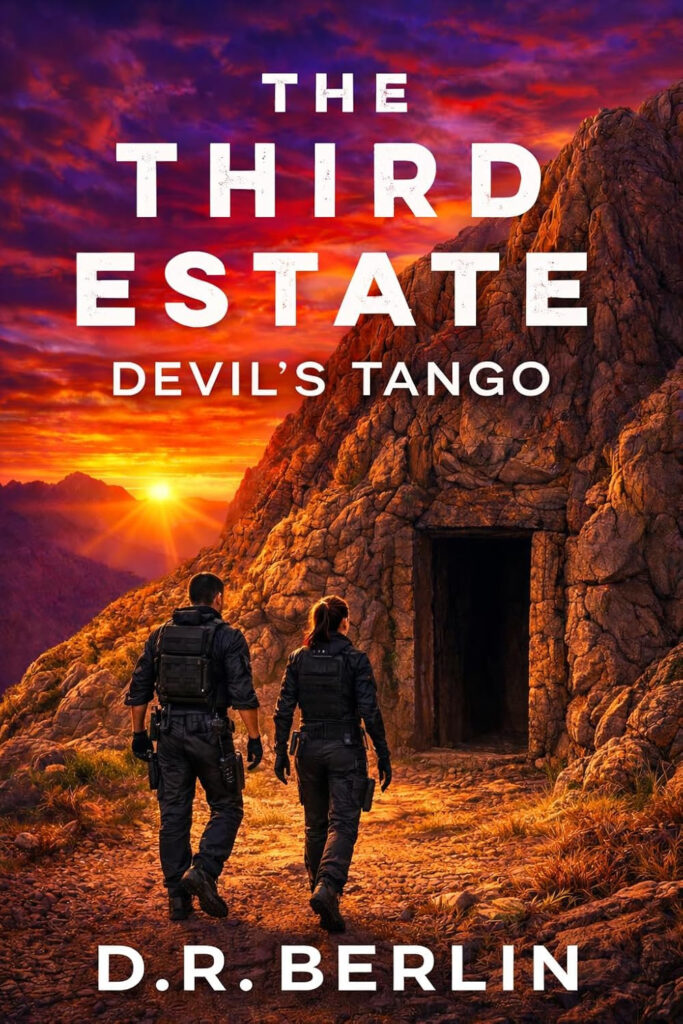
An adrenaline-filled thriller of professional killers and family secrets, The Third Estate: Devil’s Tango by D.R. Berlin offers another twisted dose of conspiracy in the Third Estate series.
When a John Doe lands in the ER with a slug in his gut, Captain Sophie Allard does all she can to save him, but he seems far more interested in passing her a cryptic message about a top-secret dossier. It isn’t long before two assassins arrive at the hospital, determined to learn the man’s final words, even if that means dropping more bodies, potentially sabotaging Sophie’s nascent medical career. However, before they can deliver the killing blow to her future, an unexpected enemy from the past comes to Sophie’s rescue, saving her from betrayal and bullets alike.
Kai Lovac is the calculating hitman on the hunt for revenge, while Sophie is a fearless healer who isn’t afraid to be in over her head; three years after their first explosive encounter, Lovac and Sophie find their lives tangled once again. Not only do they have a common enemy, but Lovac may know the truth about who she really is, and why her life keeps colliding with the Guild of Assassins and the murderous puppet masters of the Third Estate. Setting their history aside, they team up to rescue Sophie’s beloved mentor and bring down a global cabal of power brokers, putting the unlikely pair in the crosshairs of killers lurking in every shadow.
The narrative chemistry between the two lead protagonists is a satisfying clash of ego, passion, and duty, along with a dose of begrudging respect. Their relationship after the first installment is understandably fraught, which makes trust-building slow and stubborn, but their evolving dynamic is charmingly combative. They quickly become a rogue pair of treasure hunters facing down impossible odds, forced to rely on each other as their respective worlds turn against them.
Thematically, the prose explores different facets of duty and service, along with the unexpected honor of thieves, the loyalty of blood, the pain of intimate betrayal, and the burden of unwanted legacy. More directly, the plot highlights greed, influence, and violence as the fundamental forces of geopolitics and global finance, rather than comforting liberal ideas of dignity, justice, and fair representation, for a richly layered storyline that transcends the genre without driving these points home too bluntly.
Berlin’s writing is neatly balanced between exposition, dialogue, and narration, while the writing is accessible and believably gritty. There is occasional choppiness to the prose, as well as an overuse of paragraph breaks, which blunts the momentum. This is especially apparent in the novel’s action sequences, which would benefit from more variety and energy. Extended scene descriptions could also be tightened up to make the events more vivid and visceral; the prose can veer towards procedural storytelling, which lacks some intimacy, where the reader might feel like they’re inhabiting the story along with the characters.
Similarly, secondary character development is done with a heavy, archetypal hand. Figures like Alex and the Grey Lady seem to exist solely as foils and plot drivers, despite their potential as full-fledged characters with more depth and impact. Some of the plot progression also feels familiar: Lovac’s severance from the Guild and the open bounty on his head echoes the fate of John Wick, for example, though there is some comfort in familiarity, which helps move the story along.
Despite some execution issues, this bullet-riddled drama is an effortless escape, which deftly balances elements of crime fiction, conspiracy thriller, and adventure fiction.
Book Links





Design
Content
Editing
Get an Editorial Review | Get Amazon Sales & Reviews | Get Edited | Get Beta Readers | Enter the SPR Book Awards | Other Marketing Services














Leave A Comment