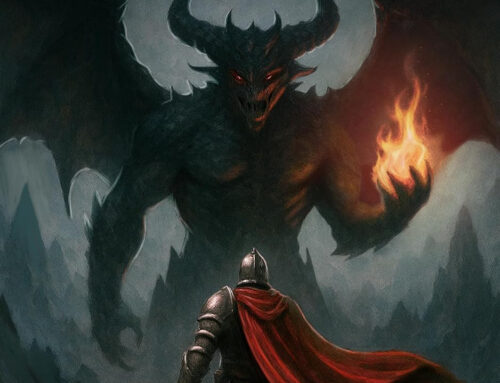
The Vagabond’s Son:Prelude To A Legacy by L.F. Falconer follows Adalanto, the son of vagabond Laramato, a pixie-like being from a people called the Piskitian, made with special powers and pointed ears and eyes. When Laramato sells Adalanto’s mother to an ogre, Adalanto must fend for himself and survive a merciless childhood to be strong enough to carve a life for himself. Watched by She, the Creator of these “sprites” on the Fifth Planet, i.e. Earth, he will be pushed down a path by this Fate who created him to discover his destiny, as the Creators vie for position by betting on which species will take dominance, among others, the humans, trolls, ogres or Piskitians.
Slightly scary magical beings loiter in these pages, such as ogres that behave in a way certainly not crafted in the fairytale vein of Tolkien: instead they are Grimm-like, revolting and terse. Trolls are skinny-legged carrion-feeders. But it is the relentless episodes of child abuse committed on Adalanto in the first chapter, who Cinderella-like carries out thankless task after task for his addled and cruel father, that makes this a more adult read. But when his father gets what’s coming to him, the boy runs into Kenadoren, a kindly stonemason who takes him in and teaches him some family rules of living in a house, as well as religion and a moral system. It is here that Adalanto starts lusting after girls and thinking about sex. But can Adalanto escape the bleak and barbaric nature of his genetic make-up and become a decent man?
There are grammatical errors in the text, which unfortunately are primarily a case of author-led punctuation, both lacking and repetitive, as well as a habit of splitting words on two lines in favor of neat passages. A professional editor would have ensured that words stayed intact in favor of the reader. This means longer sentences sometimes require more than one reading to fully comprehend their narrative. This is especially the case where Falconer weaves her own vocabulary into the text, requiring a constant flick back to the front page to grasp meanings. This was not due to the useage of a fantasy vocabulary, something to be commended in its poetic and dreamlike quality here, but of weaker sentences in need of strengthening.
The novel has a well-described background with many beautifully-imagined articles such as meals, clothing and deeply-described scenery. The idea that different beings are being played by the gods to see who wins by surviving their time on Earth is neat, and adds an extra layer of originality to the book. Characters are rounded and all have identifying features. However, the story doesn’t really roll out, and although there are nice vignettes to be enjoyed it is the touches of illustration in the work that feature as strong points here.
The Vagabond’s Son deals with prostitution, rape and domestic abuse. Therefore given its simple story style towards the younger reader, it may prove a challenge to find the age group that fits the book’s profile.
It is to be hoped that further books of the series will develop the story into more of an arc with defined plot points, and that Falconer will hone her writing technically going forward, focusing more clearly on the audience she hopes to reach.
Review Overview
Design
Content
Editing
Get an Editorial Review | Get Amazon Sales & Reviews | Get Edited | Get Beta Readers | Enter the SPR Book Awards | Other Marketing Services