

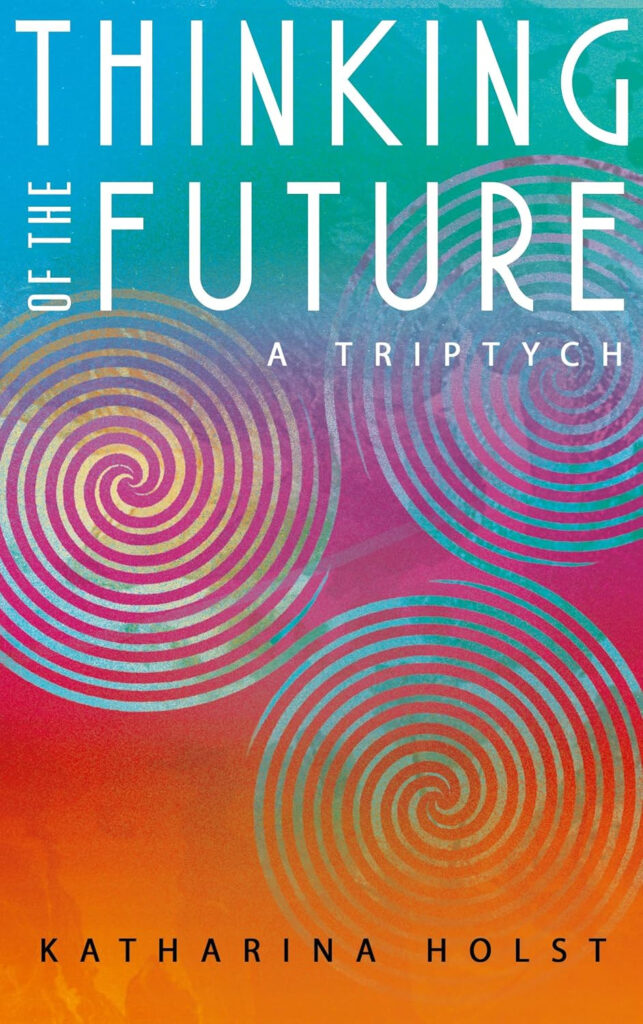
Expansive, enrapturing, and wildly inventive, Thinking of the Future by Katharina Holst is a masterful work of sci-fi/fantasy, which presents three interconnected realms, divided by sunlight, the vastness of space, and the darkness of fear.
Seeking to prove himself and find purpose as a third son to King Askadon of the Sunlands, Prince Mevi makes the unusual request to join a dangerous hunting party traversing the Darklands. Hiding his identity as a member of the royal family, he embarks on the mission, but shortly after Mevi’s departure, his brother and heir to the throne is assassinated, and the Order of the Magi begins a secret campaign to retake its power and influence.
Onboard a deep-space colony vessel in search of a home, the Elders and the young ones who have spent their entire lives onboard must decide whether to land on a new planet and start the next chapter of their story, or continue traversing the cosmos. An artificial intelligence system called The Brain has guided them this far, and they must choose whether to trust the computer or their own instincts for survival.
Back on Earth, decades in the future, the world has partially stabilized under the pillars of sustainability – economic, ecological, and social – but that hasn’t stopped the construction of a secret ark to seed humanity on a new world. One young woman sees the journey as a final chance to save her ailing father, no matter what the cost.
In the second and third stories, which are more aptly classified as sci-fi and dystopian, respectively, the plots are defined by more familiar elements of technology, artificial intelligence, democratic rule, colonialism, immigration, refugees, and interconnected global crises. The linkage of these three tales slowly becomes apparent, as readers are seemingly moved backwards in time through humanity’s extraterrestrial history.
The world-building throughout these stories is immediate and convincing, with readers first dropped into the atmospheric premise of the Darklands and Sunlands, where exotic species and eccentric customs are gradually revealed through intriguing context clues, rather than exposition. The pris – produced in the Darklands and essential to the Sunlands – is a key narrative engine of this world, like the spice in Dune or bacta in Star Wars. Similarly, the Order of the Magi, with their duty of maintaining “magic” of the Founders, has echoes of the Bene Gesserit or the Jedi, with their intergenerational plans, secrets, and king-making power, yet the stories are wholly original.
Thematically, the book can be seen as a complex allegory for real-world dynamics and the crises currently facing our planet – the prose deftly explores ideas of time, technology, and extractive relationships with the natural world, such as Mevi’s profound musings on the morality of the hudon hunt: “Did they, the tiny little humans, truly have the right to kill such a thing?” The urgent departure from Earth, the AI-guided search for a new home, and the transition to worshipping an “Oracle” can all be seen as prophetic, yet also cyclical, mirroring the ebb and flow of knowledge, tradition, and history as it redefines a species.
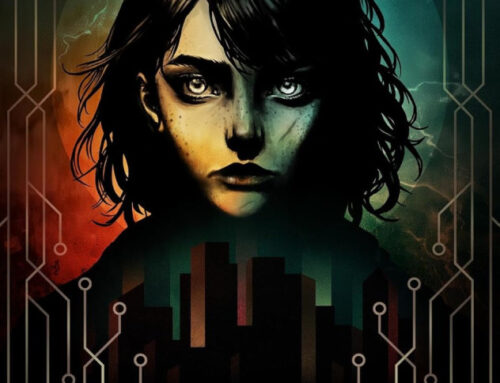
The cover or the title may make it seem like the book is more social science than fiction, but the fictional elements are at the fore. Cleverly crafted and laden with insight that never overloads the book with messaging, this collection is an intensely creative burst of brilliant storytelling.
Book Links




STAR RATING
Design
Content
Editing
Get an Editorial Review | Get Amazon Sales & Reviews | Get Edited | Get Beta Readers | Enter the SPR Book Awards | Other Marketing Services








Leave A Comment