

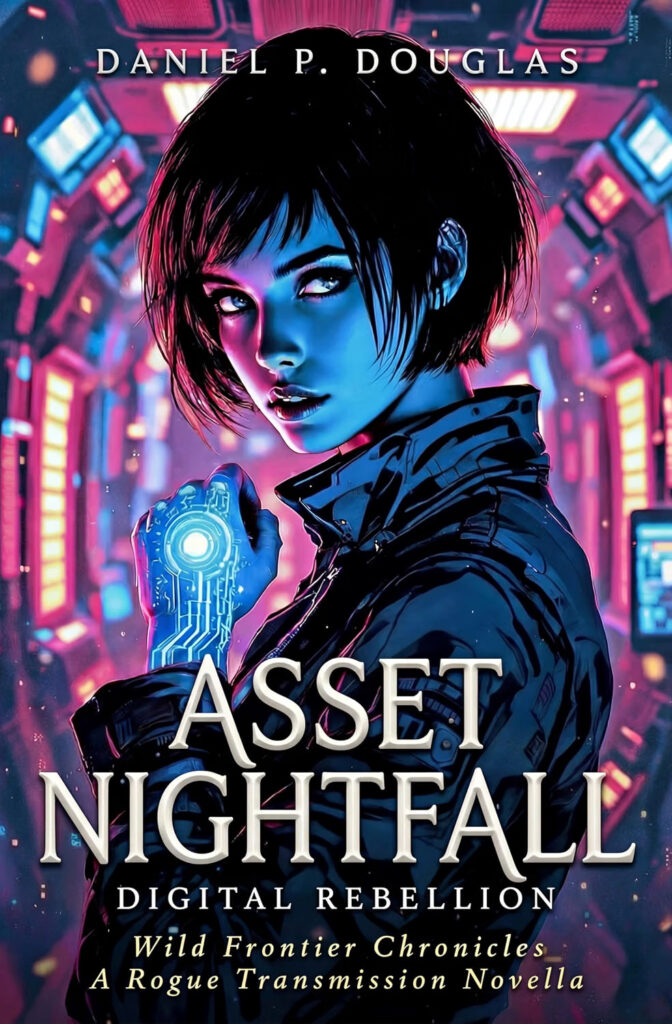
Riveting, brain-wrenching sci-fi that dances at the intersection of nightmare and prophecy, Asset Nightfall: Digital Rebellion (Wild Frontier Chronicles) by Daniel P. Douglas is a chilling piece of techno-fascist drama.
Three years after being caught hacking Federation accounts and draining their funds just a few seconds too slow, Kerstin Ahlers has become a reliably imprisoned asset of a merciless empire, forced into servitude as a covert operative. Embedded with insidious AI tech that surveils and restricts her actions while on mission, Asset Nightfall, as she is now known, receives new marching orders: steal military secrets from a remote space station by exploiting her familial connection with a member of the crew. Despite being pushed to the breaking point of loyalty by her sadistic captors, Kerstin tackles the mission in true double-agent style, knowing that what she’s stealing might just be the tool she needs to win her freedom.
The story may be set nearly four centuries in the future, when entire regions and ecosystems on Earth have been destroyed for the profit margins of the few, and the ubiquitous presence of AI has created a pervasive air of mistrust, disempowerment, and dehumanization, but this still doesn’t sound all too distant from our near-future reality, if you strip away a few centuries of advancement in spacecraft technology and interplanetary colonization. Beyond the fast-paced futuristic plot and tech-heavy narrative, the thematic thrust of this novel feels incredibly timely, addressing issues of subservience to tech overlords, the hungry rise of authoritarianism, humanity’s place in the age of AI, and the essential nature of resistance in its many forms.
One of the most interesting threads in the novel is Kerstin’s relationship to Orpheus – her implanted AI prison guard and digital handler. The nuances of their integration and compartmentalization, along with the emotional dynamics of being surveilled and influenced from within, should echo meaningfully in today’s society, where AI is seemingly being sold and melded into every corner of life. Orpheus’ apparent inability to understand Kerstin’s neuronal changes based on affection, love, and loyalty is a critical detail that reverberates with existential significance. Posing real-world questions about bodily autonomy and the dangers of our AI-integrated future within the high-octane plot of a sci-fi space opera, Douglas questions, critiques, and entertains in equal measure.
The writing is aggressively paced with a live wire of objective observation and stream-of-consciousness narration, but the prose also features a choppy rhythm and line-break patterns that can be interruptive to plot flow. Granted, this layout does feel aligned with the subject matter – the coldness of digital code and logic-driven thought – but certain passages and tangents can feel artificial in a way that reaches beyond a structural motif. That said, there are countless turns of phrase and creative flourishes that land with authentic wit, such as describing a space station as “a parasite that had learned to charge rent.”
Rife with cutting-edge commentary and a colorful cast of characters navigating realms of nebulous morality, this is a thought-provoking blast into the not-so-distant future that is at once exciting and eye-opening.
Book Links








STAR RATING
Design
Content
Editing
Get an Editorial Review | Get Amazon Sales & Reviews | Get Edited | Get Beta Readers | Enter the SPR Book Awards | Other Marketing Services













Leave A Comment